News Release Trump EPA Celebrates Children’s Health Month with 100 Actions to Protect the Nation’s Most Precious ResourceOctober 15, 2026 | Contact EPA's Press Office (press@epa.gov)WASHINGTON — The Trump Administration has been racking up huge wins when it comes to protecting children’s health. In honor of Children's Health Month, U.S. Environmental Protection Agency (EPA) released a list of 100 actions taken to protect children’s health and secure America’s future. Since January 2025, the Trump EPA has taken actions that protect children’s health by reducing lead and PFAS exposure, enhancing chemical and pesticide safety, improving air quality, and growing state and local partnerships to Make America Healthy Again. The list of 100 actions to help safeguard American children illustrates this EPA’s unwavering commitment to the health and wellbeing of American families. “Under President Trump’s leadership, EPA is focused on delivering clean air, land, and water for every American child,” said EPA Administrator Lee Zeldin, “This doesn’t just mean reducing lead exposure or more quickly cleaning up toxic sites, it also involves giving families peace of mind by equipping them with the knowledge and tools they need to keep their kids safe.” For Children’s Health Month 2026, EPA’s educational efforts revolve around three main priorities:
- Raise Awareness: Know the environmental risks that can affect children’s health.
- Act Early: Reduce hazards in the places children live, learn, and play.
- Protect and Prevent: Support healthy environments for every child, every day.
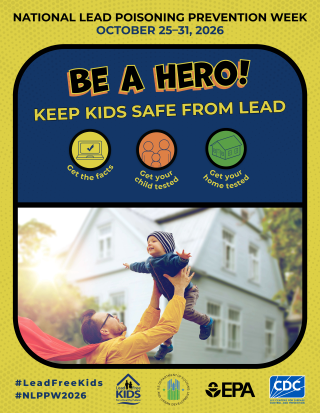
EPA urges families, schools, and communities to learn more about children’s environmental health and use available resources to reduce exposures, support prevention, and promote healthier communities for children across the country. Children’s Health Month also includes National Lead Poisoning Prevention Week, an important opportunity to raise awareness and take action to prevent lead exposures, especially in children. Here are 100 actions EPA has taken since January 20, 2025, to protect children’s health:
- Provided $2.9 billion in funding for states to reduce lead in drinking water through the Drinking Water State Revolving Fund (DWSRF).
- Worked with more than 100 drinking water systems to guide them through the process of lead service line removal through the Get the Lead Out technical assistance initiative.
- Released several tools to help states and water systems prepare for new requirements in the Lead and Copper Rule related to lead sampling in schools and childcare facilities. These tools include a resource guide, sampling waiver checklists, and frequently asked questions.
- Released a Lead and Children’s Health StoryMap to highlight information on national trends on lead and help ensure families stay healthy and safe.
- Released an Asthma & Children’s Health StoryMap to provide information on how environmental factors, such as air quality, affect health outcomes like asthma rates and other conditions.
- Updated the America’s Children and the Environment (ACE) data and trends tool to better present children’s environmental health data to non-technical audiences
- Updated the Children’s Unique Vulnerabilities to Environmental Hazards resource to include exposure examples across life stages and provides a more comprehensive picture of children’s health issues through life stages and windows of susceptibility.
- Updated the Children’s Environmental Health Facts resource to provide key facts and statistics and highlight trends and economic impacts of childhood health concerns.
- Released a resource for parents about how to protect children from elemental mercury, What to Do If You Find or Spill Mercury.
- Updated Sensible Steps to Healthier School Environments to address common areas of environmental health concerns in schools and provide information about existing low-cost or no-cost measures, programs, and resources that are available to help prevent, reduce, and resolve hazards.
- Highlighted children’s health on EPA’s Research Partner Support Stories, including science-based information to communities, families, caretakers, and school decision makers to protect children’s health and reduce environmental exposures to harmful contaminants.
- Presented information to the Colorado Association of Libraries about EPA Region 8’s Community Libraries Program, which offers an extensive inventory of information and resources related to protecting the health of children and indoor air, childhood lead poisoning prevention, and other environmental education assistance.
- Published four quarterly EPA Mountains & Plains Regional Healthy Schools Newsletter editions shared with EPA Region 8’s network of healthy schools contacts.
- Formed a Senior Lead Leadership Coordinating Committee to strengthen cross-agency efforts to reduce lead exposure and protect children from lead-related health risks, meeting EPA’s commitments under the Federal Lead Action Plan.
- Completed a Federal Lead Resources Guide for use by partners and the public, in particular with other federal departments and agencies.
- Published the updated Protect Your Family From Lead in Your Home pamphlet in multiple languages in collaboration with federal and state partners.
- Launched revamped lead website (epa.gov/lead) to streamline navigation and serve as a one-stop shop for EPA information on lead and quickly connect users to resources, tools and guidance.
- Hosted in-person and virtual educational sessions on the Lead Awareness Curriculum about the dangers of lead, and ways to reduce and prevent lead exposure and equip community leaders to educate their communities about lead.
- Hosted virtual National Meeting on EPA’s Lead-Based Paint Program for authorized Tribal and state programs and non-authorized state programs.
- Facilitated a webinar, Lead-Based Paint Awareness for Building Code Officials, on lead-based paint regulations.
- Published materials in collaboration with federal partners for individuals, communities and Tribal, state and local governments and organizations ("partners") to use to raise awareness during National Lead Poisoning Prevention Week.
- Published updated materials for the EPA/HUD Lead Dust Sampling Technician and Certified Renovator model courses as part of EPA’s implementation of the Reconsideration of the Dust-Lead Hazard Standards and Dust-Lead Post-Abatement Clearance Levels Rule.
- Released new guidance to reduce lead exposure in drinking water and help drinking water systems protect American children.
- Worked with states and federal partners to implement the Lead-Free Rule and reduce lead in pipes, plumbing fittings, and fixtures used for drinking water.
- Increased awareness among property management companies with lead safety requirements under the Lead Renovation Repair and Painting (RRP) Rule and the Real Estate Notification and Lead Disclosure Rule to protect military families living in privatized military housing.
- Issued the Residential Lead Directive for CERCLA Sites and RCRA Hazardous Waste Cleanup Program Facilities to accelerate lead cleanup at contaminated sites.
- Published a new webpage that provides healthy gardening practices for residents living in areas where soil may be contaminated with lead.
- Hosted public meetings in Colorado for community members to discuss lead and arsenic contamination in soils from historic smelters, including educational materials on lead exposure reduction.
- Advanced lead testing and remediation in schools and childcare settings across states and Tribal communities through Water Infrastructure Improvements for the Nation (WIIN) grant funding.
- Published a mapping blueprint for identifying locations in the United States for focusing high-impact interventions to reduce childhood lead exposure.
- Developed a resource list on lead risks in ammunition and fishing tackle to increase awareness about this exposure route and its impact on children’s health.
- Presented information about how to organize a soilSHOP health education community event that offers free soil lead screenings and education about how to reduce lead exposures to children and families at the EPA Tools & Resources August national webinar.
- Convened lead listening sessions in EPA Region 1 with state public health and environmental agencies in New England in partnership with the Association of State and Territorial Health Officials (ASTHO).
- Worked with partners in EPA Region 2 – including Families for Lead Freedom Now, the New York State Department of Health (NYSDOH), and the City of Syracuse – to develop stronger community relationships and community engagement materials on the Lead and Copper Rule.
- Held an inaugural lead workshop in San Juan, Puerto Rico – in collaboration with the Puerto Rico Department of Health, Region 2 Pediatric Environmental Health Specialty Unit (PEHSU), Puerto Rico Department of Environmental and Natural Resources, College of Engineers and Surveyors of Puerto Rico (CIAPR), and engineering partners – to teach construction workers how to prevent lead exposure at home.
- Hosted an availability session with local partners in EPA Region 2 – including the Puerto Rico Department of Health, Municipality of Vega Baja, and College of Medical Technologists – to conduct capillary lead tests for residents and children who attended the event.
- Worked with state departments of health in EPA Region 3 to determine needs regarding blood lead level testing and provided education to medical providers.
- Funded Lead Renovation Repair and Painting trainings in Region 6 locations to increase compliance awareness and prevent lead exposure to children.
- Increased compliance among states in EPA Region 9 to complete lead service line inventories.
- Issued the National Perchloroethylene Air Emission Standards for Dry Cleaning Facilities to reduce air pollution that can affect children’s health.
- Updated the Wildfire Smoke: A Guide for Public Health Officials, which included children’s health considerations.
- Hosted webinars for schools on ventilation, improved indoor air quality, and wildfire smoke to support school air quality planning and maintenance.
- Supported the PEHSU Asthma Home Visit Program in EPA Region 8, helping children with persistent asthma reduce triggers in their homes.
- Partnered with libraries and firefighters to provide Do-It-Yourself air cleaner demonstrations and asthma education to communities experiencing wildfire smoke in EPA Region 10.
- Awarded funding to Maine Department of Health and Human Services to support radon testing in Maine Schools.
- Added an additional PFAS to the Toxics Release Inventory reporting list.
- Published draft guidance to help wastewater utilities, landowners, and the public reduce risk from PFOA and PFOS in biosolids.
- EPA laboratory methods to measure microplastics in drinking water, helping decision-makers address microplastic pollution closer to its source.
- Published the final risk evaluation for 1,3-butadiene, which found unreasonable risks for some industrial settings that could lead to health risks for workers, including reduced birthweight pregnancies.
- Proposed a draft risk evaluation on octamethylcyclotetrasiloxane (D4), finding unreasonable risks for some industrial settings and a consumer use that could lead to effects related to reproductive outcomes.
- Published the final risk evaluations for six phthalates – dibutyl phthalate (1,2-benzene- dicarboxylic acid, 1,2- dibutyl ester) (DBP), butyl benzyl phthalate (1,2-benzene- dicarboxylic acid, 1- butyl 2(phenylmethyl) ester) (BBP), diisobutyl phthalate (1,2-benzene- dicarboxylic acid, 1,2- bis-(2methylpropyl) ester) (DIBP), dicyclohexyl phthalate (DCHP), and diethylhexyl phthalate (DEHP) – finding unreasonable risks for some industrial settings that could lead to health risks for workers, including hormone deficiencies and endocrine disruption.
- Proposed a draft risk evaluation on p-dichlorobenzene (pDCB), finding unreasonable risks for some workers and consumers, including air care products that could lead to exposures to children and potential health risks of neurotoxicity and developmental toxicity.
- Proposed a draft risk evaluation on 1,3,4,6,7,8-hexahydro-4,6,6,7,8,8-hexamethylcyclopenta [g]-2-benzopyran (HHCB), finding the most sensitive effects are developmental effects on offspring growth.
- Supported the Trump Administration’s continued efforts to crackdown on illegal toxic pesticides and chemical smuggling operations. EPA, joined by the U.S. Customs and Border Protection, inspected five seaports and land ports of entry across the country and identified thousands of violative products that are regulated under the Safe Drinking Water Act and EPA’s Lead Free Rule.
- Published a study – Laboratory investigation of inadvertently generated PCBs released from consumer products into lake water – investigating the occurrence and leaching behavior of inadvertently generated polychlorinated biphenyls (PCBs), prioritizing consumer products used by children, to better understand exposure risks.
- Published a study – Proteome profiling of emamectin-treated primary rat cortical cells following up to twelve days in vitro exposure – identifying altered protein biochemical processes that may inform mechanisms of developmental neurotoxicity related to chemical exposures.
- Published a study – Single-cell RNA sequencing of human embryonic stem cells reveals immediate and deferred transcriptomic responses to retinoic acid-mediated effects across cell subpopulations – used single-cell sequencing techniques to assess the utility of the method for understanding developmental changes related to chemical exposures for potential use in screening paradigms.
- Issued Current Progress and Research Needs to Protect Children’s Environmental Health to summarize research and policy opportunities advancing children’s environmental health.
- Led work with the President’s Task Force on Environmental Health Risks and Safety Risks to Children to improve communications and coordinate federal children’s health efforts.
- Contributed to annual reports from the Federal Interagency Forum on Child and Family Statistics.
- Created a Children’s Environmental Health Workgroup through the Association of State and Territorial Health Officials (ASTHO) to share information and best practices.
- Supported state lead program prevention programs through sharing resources and identifying areas for collaboration.
- Provided information to state officials about the Pediatric Environmental Health Specialty Units (PEHSUs) across the country.
- Supported a removal action in Massachusetts in EPA Region 1 to address lead and polychlorinated biphenyls (PCBs) contamination in soil where families and children live.
- Worked with partners in EPA Region 5 in state and local governments and organizations to create a network of neighborhood-level air quality monitoring stations in Milwaukee, Wisconsin, focusing on neighborhoods with high asthma burdens for children and adults to improve asthma awareness.
- Held two mercury trainings in EPA Region 5 in Marion County, Ohio, focused on children’s safety, proper response procedure and tactics for local responders, and mercury health risks.
- Hosted a Children’s Health Seminar with the Arkansas Department of Health and Region 6 PEHSU to strengthen the state’s ability to identify and address environmental health risks affecting children.
- Hosted a Children’s Environmental Health Symposium in Region 6 in partnership with Children’s Health Hospital of Dallas educating pediatric providers and nurses on environmental risks that can affect children’s health.
- Worked in partnership with the Region 6 Border Program and PEHSU to train pediatric health care providers and community health workers along the U.S.-Mexico Border on children’s health topics such as Community Emergency Preparedness and Household Hazardous Chemicals.
- Trained Head Start Family Resource Specialists in Region 6 on environmental risks to children, particularly the importance of both preventing lead exposure and childhood blood lead level testing.
- Coordinated with the Montana Department of Public Health and Human Services in EPA Region 8 to provide EPA resources in a four-part webinar series on reducing environmental exposures for early childcare providers.
- Provided children’s environmental health and disaster preparedness education by helping children pack “Grab and Go” bags at a Tribal event for National Emergency Preparedness Month across EPA Region 10.
- Completed the Schools Adapting to Natural Disasters project, including an assessment for Gary Community School Corporation and a technical guidance playbook for Broward County Public Schools.
- Coordinated the internal Children’s Health Activities and Research Group at EPA (CHARGE) to improve implementation, communication, and collaboration across EPA.
- Presented EPA's Air Quality Flag Program to tribes raising awareness about air quality and its related children impacts to children's health and recruited new partners across the country.
- Worked with Tribal, federal, and state partners to characterize uranium mine sites, communicate risks, develop response plans, and address contaminated homes on Tribal lands.
- Provided technical expertise on air pollutants associated with chronic respiratory health impacts, including PM2.5, ozone, volatile organic compounds (VOCs), and wood-stove emissions, and led learning activities for the Mashpee Wampanoag Tribe’s “Preserving Our Homeland” summer camp.
- Partnered with the Shinnecock Nation of Indian's Environmental Department to develop an air quality education program with the Shinnecock Boys and Girls Club and local elementary schools and libraries to review the Air Quality Index, showcase PM 2.5 purple air sensors, and lead an Air Quality Index activity with air quality flags.
- Hosted a Children’s Environmental Health educational session at a Choctaw Nation Summit, highlighting lead-based paint, household hazardous chemicals, and air quality.
- Hosted a Healthy Homes practical training on assessing and addressing health and safety risks in homes, including risks specific to children of tribal members, in partnership with the Meskwaki Nation.
- Promoted the Air Quality Flag Program to recruit new Tribal partners in Region 6 and Region 8.
- Assisted Tribal Drinking Water Systems throughout Region 9 to complete lead service line inventories.
- Funded the replacement of water storage tanks containing lead paint in the Tohono O'odham Nation.
- Provided technical assistance to drinking water systems on Tohono O’odham and Navajo lands with lead exceedances to provide public notification and comply with Lead and Copper Rule requirements.
- Took action to address uranium contamination in the Southwest and its intergenerational neurodevelopmental health effects on the Navajo Nation and surrounding Tribal communities.
- Educated Tribal leaders on actions they could take to help protect children from environmental health risks at the Region 9 Tribal Operations Committee meeting.
- Launched the Feed It Onward initiative to combat food waste, helping to ensure food is being used in productive ways, like feeding children and families, instead of ending up in landfills.
- Advanced a comprehensive PFAS strategy by highlighting innovative PFAS treatment and destruction technologies, announcing nearly $1 billion in new funding to states to address PFAS in drinking water, and issuing two proposed rules for public comment that uphold the National Primary Drinking Water Standards (NPDWS) for PFOA and PFOS.
- Launched the PFAS OUTreach—or PFAS OUT—initiative to proactively work with communities and water systems to reduce exposure to PFOA and PFOS in drinking water, years ahead of compliance with federal regulatory requirements.
- Announced a joint initiative to mark first-ever inclusion of microplastics on EPA's Contaminant Candidate List, launching the groundbreaking Advanced Research Projects Agency for Health (ARPA-H) program to detect and remove plastics from the human body.
- Announced a joint plan with the Department of Health and Human Services (HHS), and Department of Agriculture (USDA) to provide over $1 billion in investments on farm modernization and long-term food supply security.
- Sought public input on a national innovation challenge to find safer, science-based alternatives to chemical crop desiccation in a win for American families and farmers.
- Announced the next step in the review of public health risks linked to fluoride in drinking water by releasing the Protocol for Developing the Fluoride Human Health Toxicity Assessment.
- Announced $30 million in grant funding under EPA’s Real Water Technical Assistance Initiative, to provide training and technical assistance that will improve water quality in small and rural communities across America.
- Took key steps to advance Safe Drinking Water Act (SDWA) implementation by proposing to monitor contaminants that are not currently regulated but may be present in drinking water in the Sixth Unregulated Contaminant Monitoring Rule (UCMR 6).
- Developed two drinking water PFAS treatment models and a cost estimating tool for drinking water systems to understand the planning level costs for installing treatment to remove PFAS from drinking water.
- Provided comprehensive training to state agencies and technical assistance providers to support effective implementation of the 2024 PFAS drinking water regulation, which is designed to reduce exposure to contaminants that may increase the risk of developmental effects during childhood.
- Released human health benchmarks for 374 pharmaceuticals including separate benchmarks for infants and the general population. These benchmarks provide states, Tribes, and local water systems with information to identify pharmaceutical levels that may warrant further monitoring or research, helping inform efforts to protect children’s health.
- Awarding the 2026 National Environmental Leaders in Asthma recognition to the City of San Antonio Metropolitan Health Department’s San Antonio Kids BREATHE (SAKB) program.
- Requested $6.8 million to co-lead the President’s Task Force on Environmental Health Risks to Children, support Pediatric Environmental Health Specialty Units, and enhance monitoring of children’s health trends in the Fiscal Year 2027 President’s Budget.
|