EPA News: EPA funding to Maryland will support regulation of pesticides use, worker protections

https://us.vocuspr.com/Publish/518041/vcsPRAsset_518041_112155_fef3ddd8-3a34-461c-8cde-6982e6e31b5f_0.jpg

Contact: R3press@epa.gov

EPA funding to Maryland will support regulation of pesticides use, worker protections

PHILADELPHIA (July 24, 2019) – Today, the U.S. Environmental Protection Agency (EPA) announced a $359,870 Pesticides Performance Partnership grant to the Maryland Department of Agriculture (MDA). The funding will support the state's enforcement of pesticide regulations, implement programs for certifying and training pesticide applicators, and improving agricultural worker protections. 

"This funding strengthens the partnership and collaboration between Maryland and EPA in ensuring the safe use of pesticides, protecting the health of workers who are integral to the state's agricultural economy, and improving the environment," said EPA Regional Administrator Cosmo Servidio.

MDA will also use the funding to implement programs to protect endangered species, prevent pesticide contamination of ground and surface water, and implement pesticide container and containment regulations.

For more information about the regulation of pesticides https://www.epa.gov/regulatory-information-topic/regulatory-information-topic-pesticides

# # #


If you would rather not receive future communications from Environmental Protection Agency, let us know by clicking here.
Environmental Protection Agency, 1650 Arch Street, Philadelphia, PA 19103-2029 United States

EPA Administrator Andrew Wheeler Visits Cleveland, Announces Trash-Free Great Lakes Grant Program

 EPA Administrator Andrew Wheeler Visits Cleveland, Announces Trash-Free Great Lakes Grant Program

 For the first time, EPA will be requesting competitive applications for GLRI funding for trash-free water project grants in the Great Lakes

CLEVELAND (July 19, 2019) - Today, U.S. Environmental Protection Agency (EPA) Administrator Andrew Wheeler and Region 5 Administrator Cathy Stepp visited Cleveland to announce an upcoming new Great Lakes Restoration Initiative (GLRI) grant program specifically focused on funding trash-free water projects in the Great Lakes. 

"Removing trash, litter and garbage - including plastics - from marine and freshwater environments is one of EPA's highest priorities," said EPA Administrator Andrew Wheeler. "The Trash-Free Great Lakes Grant Program is intended to fund efforts by communities and other applicants to clean up beaches and waterways so that the Great Lakes watershed will continue to provide habitat for wildlife and drinking water and recreation for tens of millions of people."

EPA expects to issue a Request for Applications (RFA) in October to solicit applications from eligible entities for GLRI grants. Once the RFA is released, applicants will have approximately 45 days to respond to the RFA. EPA anticipates that approximately $2 million in total funding will be available, with a maximum grant amount of $500,000 per project. Up to 12 grants could be awarded, including two larger scale projects and 10 smaller scale projects.

"This first-of-its-kind trash-focused grant program is yet another example of progress being made under the GLRI," said EPA Region 5 Administrator/Great Lakes National Program Manager Cathy Stepp. "Thanks to this funding, a number of Great Lakes communities can receive a meaningful assist in removing trash and litter from beaches, shorelines and waterways where cleanup projects are sorely needed."

Possible types of eligible projects include:

  • Great Lakes beach and shoreline cleanup projects.
  • Great Lakes harbor and river cleanup projects.
  • Great Lakes trash and litter prevention and education projects.

Eligible entities will include state agencies, federally recognized tribes and tribal consortia, any agency or instrumentality of local governments, nonprofit organizations, interstate agencies, and colleges and universities.

More details will be made available once the RFA is released in October.

Background:

The GLRI was launched in 2010 to accelerate efforts to protect and restore the Great Lakes. Federal agencies have funded more than 4,700 projects totaling over $2.4 billion to address the most important Great Lakes priorities such as addressing agricultural nutrients and stormwater runoff, cleaning up highly-contaminated "Areas of Concern," combating invasive species and restoring habitat. Making GLRI funding available through a competitive application process is just one way that the GLRI achieves results.

EPA works directly with states, municipalities, and businesses through its Trash-Free Waters program to reduce litter, prevent trash from entering waterways, and capture trash that is already in our waters.

For more information on the GLRI, visit: https://www.glri.us/

For more information, visit: https://www.epa.gov/trash-free-waters


https://us.vocuspr.com/Publish/518041/vcsPRAsset_518041_116716_0fabc2e6-ef00-45cc-839a-329e9b69ea2b_0.jpg

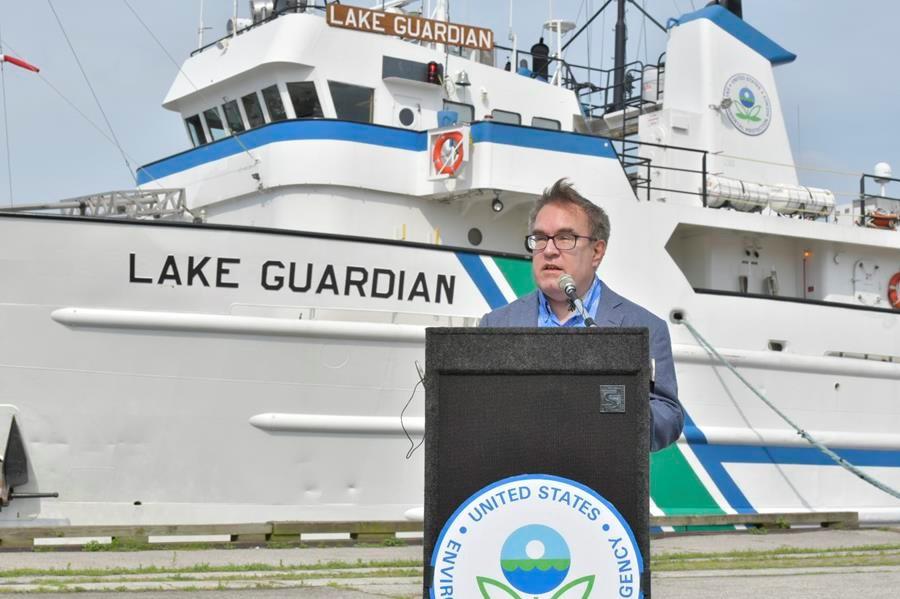
Administrator Wheeler addresses the audience outside of EPA's Lake Guardian.


https://us.vocuspr.com/Publish/518041/vcsPRAsset_518041_116717_53a728f5-f644-473a-ba8d-47456a7ad908_0.jpg

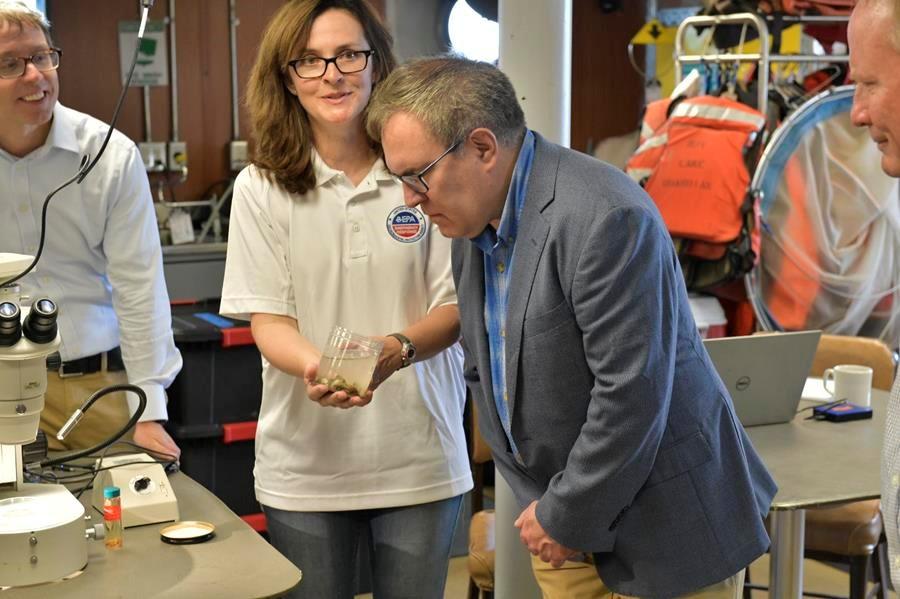
Administrator Wheeler views samples on EPA's Lake Guardian.


If you would rather not receive future communications from US EPA, Office of Public Engagement, let us know by clicking here.
US EPA, Office of Public Engagement, 1200 Pennsylvania Avenue NW, Washington, DC 20460 United States

EPA Receives 51 Requests Totaling Over $6 Billion for Third Round of WIFIA Funding

  EPA Receives 51 Requests Totaling Over $6 Billion for Third Round of WIFIA Funding

WASHINGTON (July 19, 2019) – In response to the U.S. Environmental Protection Agency's (EPA) third Notice of Funding Availability, the agency received 51 letters of interest, collectively requesting $6.6 billion in Water Infrastructure Finance and Innovation Act (WIFIA) funding. This exceeds the $6 billion that EPA is offering, demonstrating the critical need for investment in our nation's water infrastructure and strong interest in the WIFIA program.

"Since the WIFIA program's inception in 2017, EPA has received requests totaling $21.7 billion for water infrastructure projects across the country – evidence of the urgent need to modernize our nation's infrastructure," said EPA Administrator Andrew Wheeler. "Through WIFIA, EPA is playing a critical role in President Trump's efforts to upgrade our nation's infrastructure in a manner that improves public health and environmental protections while creating good, local jobs. In 2019 alone, WIFIA could support the creation of up to 180,000 jobs and improve water quality for millions of Americans."

Following a landmark 2018 program year, in which EPA received 62 letters of interest and invited 39 projects to apply for WIFIA loans, the agency received 51 new letters of interest for 2019. EPA is offering $6 billion in loans that would help fund approximately $12 billion in water infrastructure projects. The agency received letters from prospective borrowers located in 21 states, including 6 states for which no borrower had previously sought WIFIA loans. This brings the total number of states where WIFIA loans have been requested to 35, plus the District of Columbia and Guam.

For the first time, EPA announced water reuse and recycling as a WIFIA priority and several prospective borrowers submitted letters of interest to implement such projects. The funding requests also cover a wide variety of other topics, including wastewater, drinking water, desalination, stormwater management and combined approaches. The majority of prospective borrowers are municipal government agencies, while other prospective borrowers include small communities, public-private partnerships and corporations. As the next step in this competitive process, EPA will evaluate the letters for project eligibility, credit worthiness, engineering feasibility and alignment with WIFIA's statutory and regulatory criteria. The agency will then identify projects it intends to finance and invite those selected entities to submit formal applications this fall. See the full list of letters of interest submitted.

Background

Established by the Water Infrastructure Finance and Innovation Act of 2014, the WIFIA program is a federal loan and guarantee program at EPA that aims to accelerate investment in the nation's water infrastructure by providing long-term, low-cost supplemental credit assistance for regionally and nationally significant projects. EPA's WIFIA program plays an important part in President Trump's infrastructure plan, which calls for expanding project eligibility.

To date EPA has issued nine loans totaling over $2 billion in WIFIA credit assistance to help finance over $5 billion for water infrastructure projects and create over 6,000 jobs. The WIFIA program has an active pipeline of pending applications and projects that will lead to billions of dollars invested in additional construction and create thousands of jobs. To learn more the 2019 WIFIA letters of interest submitted, visit: https://www.epa.gov/wifia/wifia-letters-interest.

For more information about the WIFIA program, visit: https://www.epa.gov/wifia.


If you would rather not receive future communications from US EPA, Office of Public Engagement, let us know by clicking here.
US EPA, Office of Public Engagement, 1200 Pennsylvania Avenue NW, Washington, DC 20460 United States

EPA Awards $2.3 Million in Funding for 21 Small Businesses to Develop Innovative Technologies

  EPA Awards $2.3 Million in Funding for 21 Small Businesses to Develop Innovative Environmental Technologies

WASHINGTON — The U.S. Environmental Protection Agency (EPA) announced $2.3 million in funding for 21 small businesses to develop technologies that will help protect human health and the environment by monitoring air quality, treating drinking water, cleaning up contaminated sites, and creating greener, less toxic materials.

"These funds support small businesses that have developed new technologies to monitor air quality, test for PFAS, and address other pressing environmental challenges," said EPA Administrator Andrew Wheeler. "Through EPA's Small Business Innovation Research program, we provide important assistance to entrepreneurs as they develop innovative solutions that will strengthen both environmental protections and economic growth." 

These 21 small businesses are receiving Phase I contracts from EPA's Small Business Innovation Research (SBIR) program, which awards contracts annually through a two-phase competition. Companies compete for a Phase I award of up to $100,000 by submitting research that addresses key environmental issues. After receiving a Phase I award, companies are eligible to compete for a Phase II award of up to $300,000 to further develop and commercialize the technology.

SBIR Phase I recipients include:

  • Creare LLC, Hanover, N.H., AirQAST Portable Automated Air Quality Monitoring
  • Anfiro, Inc., Woburn, Mass., Block Copolymer Membranes for Total Removal of Ionic and Nonionic PFAS from Industrial Wastewaters Optionally Co-Contaminated by Alcohols
  • Brisea Group, Inc., Parsippany, N.J., Development of Microwave-assisted Membrane Filtration for Pretreatment of PFAS in Industrial Wastewater
  • AAPLasma LLC, Feasterville, Pa., Non-Thermal Plasma Assisted Inactivation of Antibiotic Resistant Bacteria in Wastewater
  • Framergy Inc., Wilmington, Del., Innovative Pretreatment Technologies for PFAS in Industrial Wastewater
  • Mainstream Engineering Corporation, Rockledge, Fla., Field-deployable Measurement of Fluorocarbons in Water
  • PTP Strategy LLC, Gainsville, Fla., CDD-SORT: A Next-Generation System to Detect Hazardous & Recyclable Materials in Discarded C&D Debris
  • Faraday Technology Inc., Englewood, Ohio, Electrochemical Pretreatment of PFAS-Contaminated Aqueous Effluents; Electrochemical Extraction and Remediation of PFAS in Soils
  • Talk About It Solutions DBA Remooble, Maple Grove, Minn., Fast Acting Bio-Derived and Bio-Degradable Paint Removers for Epoxy, Latex and Lacquer Coatings
  • Claros Technologies Inc., Stillwater, Minn., Novel Sorbent Technology for Simultaneous Removal and Degradation of Waterborne PFAS
  • Polykala Technologies LLC, San Antonio, Texas, Development of "Smart" Polymer Nanofiber Mats for Selective and Efficient Removal of PFAS from Landfill Leachate 
  • TDA Research Inc., Wheat Ridge, Colo., Disposable Test Strips for Ultra-Sensitive Quantification of Polyfluoroalkyl Substances in Ground Water; Development of a Non-Toxic Paint Stripper
  • Sporian Microsystems Inc., Lafayette, Colo., Low Cost Hyperspectral Measurement System to identify Harmful Materials in Construction and Demolition (C&D) Materials
  • Oxbyel Technologies, Inc., Mesa, Ariz., Electrochemical Mineralization of PFAS in Industrial Wastewater
  • QuakeWrap, Inc., Tucson, Ariz., Trenchless Water Main Point Repairs with SuperLaminate
  • 2W iTech LLC, San Diego, Calif, Rapid Field Trace Detection of Perfluoroalkyl Substance in Water
  • BioLargo, Inc., Westminster, Calif., Aqueous Electrostatic Concentrator to Remove Per-and Poly-fluroakyl Substances from Water
  • KWJ Engineering Incorporated, Newark, Calif., Ultralow Power Sensor Package for Ground Level Air Pollution Levels from Wildland Fires
  • MicroAeth Corporation DBA AethLabs, San Francisco, Calif., Black Carbon and UV Particulate Matter, Multi-Gas, Multi Pollutant Sensor Platform
  • Intellisense Systems, Inc., Torrance, Calif., Remote Air Quality Reporting (RAQR) Device
  • Enoveo USA, Berkeley, Calif., The NODE biosensor: real-time contaminant detection in stormwater
     

EPA's SBIR funding supports both the economy and the environment by creating jobs and promoting small businesses to bring environmental technologies to market. One EPA SBIR small business, GreenTechnologies, LLC, is commercializing a sustainable and innovative treatment and nutrient recovery process for wastewater. Their processes recover nutrients such as phosphorus, carbon and nitrogen in wastewater and convert the excess nutrients into sustainable slow-release fertilizers, branded under the name GreenEdge®, which are being sold commercially throughout the country and internationally.

EPA is one of 11 federal agencies that participate in the SBIR program, enacted in 1982 to strengthen the role of small businesses in federal research and development, create jobs, and promote U.S. technical innovation. To be eligible, a company must be an organized, for-profit U.S. business and have fewer than 500 employees.

For more information on EPA's SBIR Phase I recipients, visit: https://cfpub.epa.gov/ncer_abstracts/index.cfm/fuseaction/recipients.display/rfa_id/641/records_per_page/ALL

Learn more about EPA's SBIR program at: www.epa.gov/sbir and learn about the current open Phase 1 SBIR solicitation, which closes on July 31, at: www.epa.gov/sbir/sbir-funding-opportunities. 

Learn more about the federal SBIR program at: https://www.sbir.gov/


If you would rather not receive future communications from US EPA, Office of Public Engagement, let us know by clicking here.
US EPA, Office of Public Engagement, 1200 Pennsylvania Avenue NW, Washington, DC 20460 United States

EPA News Release: Delaware Firm Among Recipients of EPA Small Business Grants for New Technologies

https://us.vocuspr.com/Publish/518041/vcsPRAsset_518041_112155_fef3ddd8-3a34-461c-8cde-6982e6e31b5f_0.jpg

Contact:  R3press@epa.gov

EPA Awards $2.3 Million in Funding for 21 Small Businesses to Develop Innovative Environmental Technologies

Delaware Firm to Test Novel Technology for Remediating PFAS in Water

PHILADELPHIA, July 19, 2019 – The U.S. Environmental Protection Agency (EPA) has announced $2.3 million in funding for 21 small businesses to develop technologies that will help protect human health and the environment by monitoring air quality, treating drinking water, cleaning up contaminated sites, and creating greener, less toxic materials.

"These funds support small businesses that have developed new technologies to monitor air quality, test for PFAS, and address other pressing environmental challenges," said EPA Administrator Andrew Wheeler. "Through EPA's Small Business Innovation Research program, we provide important assistance to entrepreneurs as they develop innovative solutions that will strengthen both environmental protections and economic growth." 

These 21 small businesses are receiving Phase I contracts from EPA's Small Business Innovation Research (SBIR) program, which awards contracts annually through a two-phase competition. Companies compete for a Phase I award of up to $100,000 by submitting research that addresses key environmental issues. After receiving a Phase I award, companies are eligible to compete for a Phase II award of up to $300,000 to further develop and commercialize the technology.

framergy Inc., of Wilmington, Delaware, is one of the 21 recipients of EPA's research funding.  framergy, in collaboration with Texas A&M University, will develop a novel water pretreatment system which combines the use of a cutting-edge nanostructured sorbent for effective removal of per- and polyfluoralkyl substances, otherwise known as PFAS.  At the heart of the technology is its innovative, chemically stable, metal organic frameworks.

"Our company's SBIR-funded titanium metal organic frameworks have proven to not only capture PFAS in water systems, but to break them down into safer substances with the help of the sun," said framergy's Chief Operating Officer Ray Ozdemir. 

EPA's SBIR funding supports both the economy and the environment by creating jobs and promoting small businesses to bring environmental technologies to market. For instance, one EPA SBIR small business, GreenTechnologies, LLC, is commercializing a sustainable and innovative treatment and nutrient recovery process for wastewater. Their processes recover nutrients such as phosphorus, carbon and nitrogen in wastewater and convert the excess nutrients into sustainable slow-release fertilizers, branded under the name GreenEdge®, which are being sold commercially throughout the country and internationally.

EPA is one of 11 federal agencies that participate in the SBIR program, enacted in 1982 to strengthen the role of small businesses in federal research and development, create jobs, and promote U.S. technical innovation. To be eligible, a company must be an organized, for-profit U.S. business and have fewer than 500 employees.

For more information on EPA's SBIR Phase I recipients, visit https://cfpub.epa.gov/ncer_abstracts/index.cfm/fuseaction/recipients.display/rfa_id/641/records_per_page/ALL

Learn more about EPA's SBIR program at www.epa.gov/sbir.

Learn more about the federal SBIR program at www.SBIR.gov.


If you would rather not receive future communications from Environmental Protection Agency, let us know by clicking here.
Environmental Protection Agency, 1650 Arch Street, Philadelphia, PA 19103-2029 United States

EPA News Release: Phila.-based Firm Among 21 Small Businesses Receiving EPA Grants

https://us.vocuspr.com/Publish/518041/vcsPRAsset_518041_112155_fef3ddd8-3a34-461c-8cde-6982e6e31b5f_0.jpg

Contact:  r3press@epa.gov

EPA Awards $2.3 Million in Funding for 21 Small Businesses to Develop Innovative Environmental Technologies

Philadelphia-based Firm to Test Waste Water Treatment Technology


PHILADELPHIA, July 19, 2019 – The U.S. Environmental Protection Agency (EPA) has announced $2.3 million in funding for 21 small businesses to develop technologies that will help protect human health and the environment by monitoring air quality, treating drinking water, cleaning up contaminated sites, and creating greener, less toxic materials.

"These funds support small businesses that have developed new technologies to monitor air quality, test for PFAS, and address other pressing environmental challenges," said EPA Administrator Andrew Wheeler. "Through EPA's Small Business Innovation Research program, we provide important assistance to entrepreneurs as they develop innovative solutions that will strengthen both environmental protections and economic growth." 

These 21 small businesses are receiving Phase I contracts from EPA's Small Business Innovation Research (SBIR) program, which awards contracts annually through a two-phase competition. Companies compete for a Phase I award of up to $100,000 by submitting research that addresses key environmental issues. After receiving a Phase I award, companies are eligible to compete for a Phase II award of up to $300,000 to further develop and commercialize the technology.

AAPlasma, LLC, located at the Pennovation Center in Philadelphia, is one of the 21 recipients of EPA's research funding.  AAPlasma, with the support of Drexel University's Nyheim Plasma Institute (NPI), will use the EPA's SBIR funding opportunity to further develop a waste water treatment technology that offers better public health protection from major factors that lead to antimicrobial risks. 

According to the World Health Organization, antimicrobial resistance is one of the greatest threats to global health.  Antimicrobial resistance refers to the natural ability of bacteria and other microbes to develop resistance to the medicines we use to treat them, and the process is accelerated by inappropriate or excessive use of pharmaceutical products designed to kill unwanted pathogens in humans, animals and crops. In particular, the overuse and misuse of antibiotics in human and animal health is fueling resistance.  

"The EPA SBIR program allows small businesses, like AAPlasma LLC, to put out-of-the-box ideas to the test that could potentially revolutionize the way we approach some of the greatest environmental challenges we face today," said Charles Bailey, Chief Operations Officer for AAPlasma.  "We at AAPlasma believe our technology can soon be used to affordably and effectively treat wastewater from various sources that are prone to containing antibiotic-resistant bacteria, and rendering it completely safe for reuse. We have the SBIR program to thank for kicking off this possibility."

EPA's SBIR funding supports both the economy and the environment by creating jobs and promoting small businesses to bring environmental technologies to market. For instance, one EPA SBIR small business, GreenTechnologies, LLC, is commercializing a sustainable and innovative treatment and nutrient recovery process for wastewater. Their processes recover nutrients such as phosphorus, carbon and nitrogen in wastewater and convert the excess nutrients into sustainable slow-release fertilizers, branded under the name GreenEdge®, which are being sold commercially throughout the country and internationally.

EPA is one of 11 federal agencies that participate in the SBIR program, enacted in 1982 to strengthen the role of small businesses in federal research and development, create jobs, and promote U.S. technical innovation. To be eligible, a company must be an organized, for-profit U.S. business and have fewer than 500 employees.

For more information on EPA's SBIR Phase I recipients, visit https://cfpub.epa.gov/ncer_abstracts/index.cfm/fuseaction/recipients.display/rfa_id/641/records_per_page/ALL

Learn more about EPA's SBIR program at www.epa.gov/sbir.

Learn more about the federal SBIR program at www.SBIR.gov.


If you would rather not receive future communications from Environmental Protection Agency, let us know by clicking here.
Environmental Protection Agency, 1650 Arch Street, Philadelphia, PA 19103-2029 United States
EPA Role in American Electric Power Consent Decree

  EPA Role in American Electric Power Consent Decree

WASHINGTON - EPA supports power generation from all sources of energy, in compliance with the Clean Air Act.

On July 17, the U.S. District Court for the Southern District of Ohio approved a modification to a 2007 consent decree among American Electric Power (AEP), the State of New York, and environmental groups, including the Sierra Club, regarding AEP's Rockport Generating Station, located near Rockport, Indiana.  Through the modification, the United States extended the deadline for AEP to retrofit Rockville Unit 1 until December 31, 2028, and removed the requirement to retrofit, retire, refuel or re-power Rockville Unit 2, all in exchange for additional pollution control retrofits and emissions reductions. 

Separately, the State of the New York and Sierra Club sought retirement of Rockville Unit 1, which AEP agreed to do in settlement of their claims.  If the company choses to shut down Unit 1, some of the Unit 1 retrofit requirements sought by the United States will not apply.

EPA did not seek retirement of any of AEP's facilities.

To read the consent decree: https://www.epa.gov/enforcement/consent-decree-and-modifications-american-electric-power-service-corporation


If you would rather not receive future communications from US EPA, Office of Public Engagement, let us know by clicking here.
US EPA, Office of Public Engagement, 1200 Pennsylvania Avenue NW, Washington, DC 20460 United States

EPA Announces $218 Million Water Infrastructure Loan to Silicon Valley Clean Water

EPA Announces $218 Million Water Infrastructure Loan to Silicon Valley Clean Water

WASHINGTON (July 17, 2019) - The U.S. Environmental Protection Agency (EPA) announced a $218 million Water Infrastructure Finance and Innovation Act (WIFIA) loan to Silicon Valley Clean Water (SVCW) to finance wastewater infrastructure upgrades that will protect public health and the San Francisco Bay.

"This $218 million WIFIA loan will help the Bay Area upgrade its wastewater infrastructure and protect the health of the bay and local residents while at the same time creating well-paying jobs," said EPA Administrator Andrew Wheeler. "Through WIFIA, EPA is playing a leading role in President Trump's efforts to upgrade our nation's infrastructure, create jobs, and safeguard public health and the environment. EPA has issued nine WIFIA loans under President Trump totaling over $2 billion in credit assistance to help finance over $5 billion for water infrastructure projects and create over 6,000 jobs."

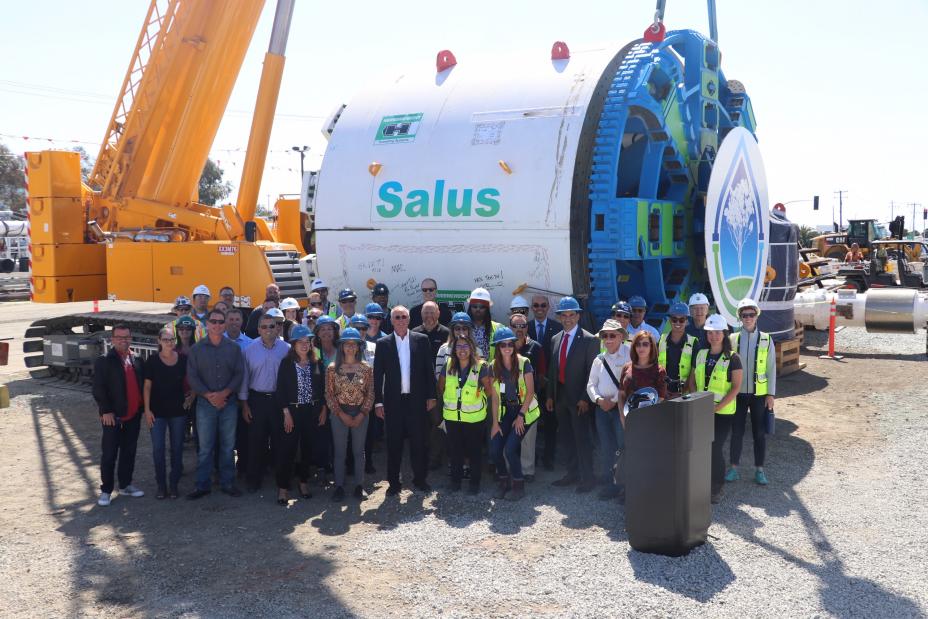
During an event hosted by SVCW in Redwood City, California the Tunnel Boring Machine-an $18.2 million machine selected as an alternative to more disruptive construction options-was available for viewing. Its name, Salus, was revealed before beginning two years of work constructing a wastewater conveyance pipeline. The loan closing was announced at this event, with Warren Lieberman and Teresa Herrera of Silicon Valley Clean Water and Tomás Torres, Water Division Director for EPA's Pacific Southwest Region.

With EPA's WIFIA loan, SVCW's Regional Environmental Sewer Conveyance Upgrade (RESCU) Program will rehabilitate aging wastewater infrastructure and construct new facilities to improve the system's safety and reliability and protect the San Francisco Bay. The program will construct a 3.3-mile gravity pipeline, replace four pump stations, and build a new preliminary treatment facility. The program will also add capacity to manage stormwater. When completed, SVCW will be able to handle future wastewater wet weather flows of up to 108 million gallons per day.

"SVCW's mission to protect public health and the environment in a cost efficient, practical, and responsible manner is greatly facilitated by receiving a loan under the WIFIA loan program," said Teresa Herrera, Plant Manager of Silicon Valley Clean Water. "We are appreciative that the U.S. government supports critical wastewater infrastructure upgrades and understands the value of protecting our environment and supporting our local economy."

The RESCU Program will cost $495 million in capital dollars. The EPA's WIFIA loan is funding eligible project costs, plus capitalized interest, which combined is valued at $517 million. EPA's WIFIA loan will finance a significant amount-up to $218 million. The WIFIA loan will save SVCW an estimated $43 million compared to typical bond financing. Project construction and operation are expected to create 400 jobs.

Background on WIFIA

Established by the Water Infrastructure Finance and Innovation Act of 2014, the WIFIA program is a federal loan and guarantee program administered by EPA. WIFIA's aim is to accelerate investment in the nation's water infrastructure by providing long-term and low-cost supplemental credit assistance for regionally and nationally significant projects. EPA's WIFIA program plays an important part in President Trump's infrastructure plan, which calls for expanding project eligibility.

To date EPA has issued nine loans totaling over $2 billion in WIFIA credit assistance to help finance over $5 billion for water infrastructure projects and create over 6,000 jobs. The WIFIA program has an active pipeline of pending applications and projects that will lead to billions of dollars invested in additional construction and create thousands of jobs.

For more information about the WIFIA program, visit: https://www.epa.gov/wifia.


https://us.vocuspr.com/Publish/518041/vcsPRAsset_518041_116712_ea5246d5-44df-448d-b990-746b481af2b2_0.jpg

Water Division Director for EPA's Pacific Southwest Region Tomás Torres with representatives of Silicon Valley Clean Water and other dignitaries at the event and loan closing announcement.


If you would rather not receive future communications from US EPA, Office of Public Engagement, let us know by clicking here.
US EPA, Office of Public Engagement, 1200 Pennsylvania Avenue NW, Washington, DC 20460 United States

Air Pollution Trends Show Cleaner Air, Growing Economy

 Air Pollution Trends Show Cleaner Air, Growing Economy

WASHINGTON (July 17, 2019) — Today, the U.S. Environmental Protection Agency (EPA) released its annual report on air quality, tracking our nation's progress in improving air quality since the passage of the Clean Air Act. "Our Nation's Air: Status and Trends Through 2018" documents the considerable improvements in air quality across America since 1970.

"One of America's great but untold environmental success stories is that we have made – and continue to make – great improvements in our air quality, thanks largely to state and federal implementation of the Clean Air Act and innovation in the private sector," said EPA Administrator Andrew Wheeler.  "Emissions of all key air pollutants dropped between 2016 and 2018, and lead and sulfur dioxide concentrations dropped by double-digit percentages during the same period. The U.S. is a global leader in clean air progress, and we've proven that we can protect the environment while growing our economy."

The report released today shows that, between 1970 and 2018, the combined emissions of six key pollutants dropped by 74 percent, while the U.S. economy grew 275 percent.

From 2016 to 2018, emissions of key air pollutants continued to decline:

  • Nitrogen Oxides (NOx) ↓ 8.7 percent 
  • Particulate Matter 2.5 (PM 2.5) ↓ 1.9 percent
  • Particulate Matter 10 (Including lead) (PM 10) ↓ 1.2 percent
  • Sulfur Dioxide (SO2) ↓ 7.8 percent
  • Carbon monoxide (CO) ↓ 7.2 percent
  • Volatile Organic Compounds (VOC) ↓ 3.3 percent

In addition, average concentrations of harmful air pollutants decreased considerably across our nation between 1990 and 2018:

  • Ground-level ozone (8-hour) ↓ 21 percent
  • Fine Particulate Matter (annual) ↓ 39 percent (from 2000)
  • Coarse Particulate Matter (24-hour) ↓ 26 percent 
  • Sulfur dioxide (1-hour) ↓ 89 percent
  • Nitrogen dioxide (annual) ↓ 57 percent
  • Lead (3-month average) ↓82 percent (from 2010); and
  • Carbon monoxide (8-hour) ↓ 74 percent

EPA examines long-term trends to track the nation's progress in cleaning the air. Air quality concentrations can vary year to year, even as human-caused emissions continue to decline. Variations in weather and natural events such as dust storms and wildfires can have an impact on air quality in affected areas. As a whole, human-caused emissions of the six common pollutants dropped in 2018, continuing the long-term trend. Despite this, the report shows that monitors in some areas logged increases in concentrations of particulate matter in the outdoor air, due in part to natural events such as wildfires.  The increases in these areas had a small, but noticeable, impact on the national average.

The report includes interactive graphics that enable citizens, policymakers and stakeholders to view and download detailed information by pollutant, geographic location and year.  Explore the report and download graphics and data here: (https://gispub.epa.gov/air/trendsreport/2019/)

The Air Trends report is one of a number of EPA resources tracking pollution trends and showing U.S. progress in improving our environment. Learn more at the following sites:


If you would rather not receive future communications from US EPA, Office of Public Engagement, let us know by clicking here.
US EPA, Office of Public Engagement, 1200 Pennsylvania Avenue NW, Washington, DC 20460 United States