EPA Confirms Habitat Improvements at Rochester Embayment Area of Concern in New York

https://us.vocuspr.com/Publish/518041/vcsPRAsset_518041_112155_fef3ddd8-3a34-461c-8cde-6982e6e31b5f_0.jpg

Contact: senn.john@epa.gov 

EPA Confirms Habitat Improvements at Rochester Embayment Area of Concern in New York

11 of 14 Beneficial Uses Now Restored  

https://us.vocuspr.com/Publish/518041/vcsPRAsset_518041_119704_f13975b1-4eef-48cd-b5c0-5df86bb4b658_0.jpg

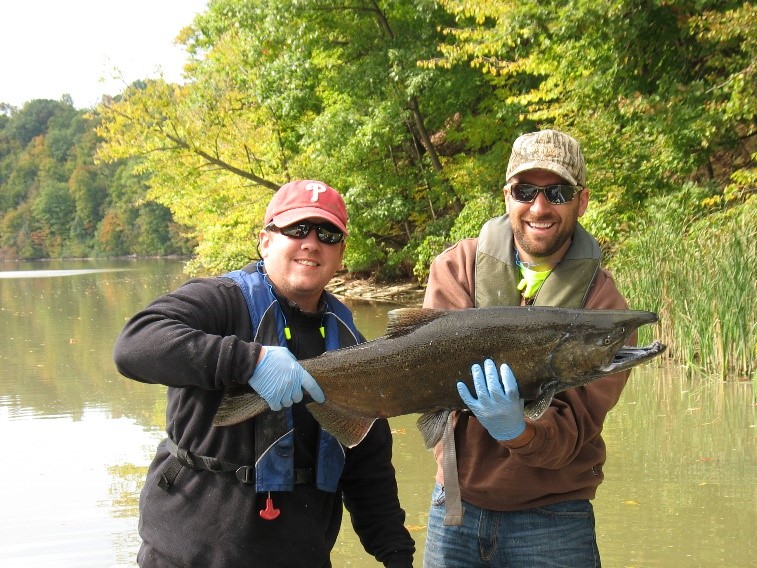
NEW YORK (September 1, 2021) – Today, the Environmental Protection Agency announced that habitat for mink and bottom-dwelling aquatic plants and animals has improved to the point where the Degradation of Fish and Wildlife Populations Beneficial Use Impairment, or BUI, can be removed from in the Rochester Embayment Area of Concern. The area of concern is a 35-square mile portion of Lake Ontario. After years of work, including remediation and safeguard efforts, environmental monitoring shows that the removal criteria set by the State of New York has been met.                                                                                                           Chinook salmon captured during a fish community survey Photo Credit: NYS DEC

Research shows that healthy mink now reproduce in Rochester Bay. Another study confirms that the habitat is also healthier for bottom-dwelling animals, plants and organisms. Over the last decade, EPA and its federal, state and local partners have completed several projects to improve the condition of sediment, restore wetlands and improve habitat throughout the AOC.  

"These habitat improvements are important for the many species that depend on Lake Ontario to thrive and Rochester and Monroe County communities committed to seeing better water quality in the lake," said EPA acting Regional Administrator Walter Mugdan. "Today's news demonstrates EPA's commitment to protecting and restoring the Great Lakes, which is only possible with strong partnerships at every level of government and with local communities."

New York State Department of Environmental Conservation (DEC) Commissioner Basil Seggos said, "Today marks a key milestone in the restoration of the Rochester Embayment and another critical step forward advancing New York's sustained progress improving Lake Ontario's water quality and enhancing wildlife habitat. With our local, state, and federal partners, DEC is proud of our work cleaning up sediment and overseeing remediation in the Lower Genesee River that led to this moment, and we are committed to our common goal of restoring Lake Ontario."

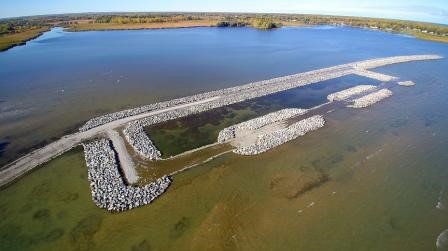
  • Using Great Lakes Restoration Initiative, or GLRI, funding, U.S. Army Corps of Engineers constructed a 1,695-foot barrier island at the mouth of Braddock Bay and restored 340 acres of emergent and submergent marsh areas.
  •  
  • https://us.vocuspr.com/Publish/518041/vcsPRAsset_518041_119707_457c724b-f42a-4991-ac83-041915127f17_0.jpg
  • Habitat restoration work at Braddock Bay, New York. Photo Credit: U.S. Fish and Wildlife Service
  • Using GLRI funding, U.S. Fish and Wildlife Service created 15.4 acres of pothole habitat and 16 acres of habitat mounds in the confluence of West and Salmon creeks, Lower Salmon Creek, Long Pond West, Buck Pond East and the north portion of Braddock Bay. In addition, 65 acres of wetland were restored or enhanced, and 1,800 linear feet of open water channels were restored.
  • Using GLRI funding, Ducks Unlimited restored 175 acres of coastal marsh habitat, 40 acres of sedge meadow and seven acres of fish spawning pools at Buck Pond, Buttonwood Creek and Salmon Creek. Hydrological connectivity between these waterbodies and Lake Ontario was also restored
  • New York State Department of Environmental Conservation dredged approximately 29,000 cubic yards of contaminated sediment from the Lower Genesee River and then capped the two dredged areas at Eastman-Kodak Business Park in Rochester.

https://us.vocuspr.com/Publish/518041/vcsPRAsset_518041_119708_406777c5-042e-4b61-9a48-ed802871f4ff_0.jpg

Mink at the Rochester Embayment AOC Photo Credit: Brady Dilllsworth, NYS DEC

EPA, the State of New York and many partners are committed to restoring and protecting the Great Lakes as work continues to address three remaining BUIs in Rochester Bay:  

  • Degradation of Aesthetics
  • Loss of Fish and Wildlife Habitat
  • Bird and Animal Deformities or Reproductive Problems

Launched in 2010, the GLRI is a results-driven program to protect and enhance the largest system of fresh surface water in the world. EPA and its partners have now removed 102 BUIs from AOCs in the U.S.

For more information see the Rochester Embayment AOC Degradation of Fish and Wildlife Populations BUI Removal Report, April 2021

Follow EPA Region 2 on Twitter at http://twitter.com/eparegion2 and visit our Facebook page, http://facebook.com/eparegion2


21-055                                                   ###


If you would rather not receive future communications from Environmental Protection Agency, let us know by clicking here.
Environmental Protection Agency, 290 Broadway, New York,, NY 10007-1866 United States

EPA Announces Steps to Advance the Cleanup for Raritan Bay Superfund Site Community


Image


CONTACT: mcbay.stephen@epa.gov

EPA Announces Steps to Advance the Cleanup for Raritan Bay Superfund Site Community

WASHINGTON (August 26, 2021) – U.S. Environmental Protection Agency Administrator Michael S. Regan and House Energy and Commerce Chairman Frank Pallone announced today that EPA will take over completing the design plans for the Seawall Sector of the Raritan Bay Slag Superfund site in Old Bridge Township and Sayreville, New Jersey. After reviewing the most recent draft of the design plan prepared by NL Industries (NL), a potentially responsible party (PRP) for the site, EPA determined the design plans continue to have significant technical issues and concerns, despite EPA's oversight and detailed input. By taking over the work, EPA will ensure the design is completed in a technically sound manner that will lead to a successful cleanup of the Seawall Sector.

"Today's action will allow us to move forward quickly and effectively for this Superfund site community," said Administrator Regan. "I appreciate Congressman Pallone's dedication to environmental protection and to our Superfund program. EPA's Superfund program is about protecting people's health. We must address the high lead levels that are the legacy of using slag to build walls and jetties; and we must not lose sight of the fact that this critical work impacts the availability of a treasured local resource – the beach."

"I'm proud to announce today that EPA now has a plan to take over the Raritan Bay Slag Superfund site, which will ensure it is properly cleaned up and that the surrounding communities have the peace of mind they deserve. This is a big day for the Old Bridge community, which will ultimately be able to use the space without fear of the health risks that come with living near a Superfund site," said Congressman Pallone. "I'm grateful for Administrator Regan's leadership and for taking the time to come to New Jersey today to see firsthand what's at stake for our state as we continue to push for Superfund site cleanup. New Jersey's ongoing challenges with Superfund cleanups is exactly why I pressed hard for the inclusion of my Superfund Polluter Pays Act in the bipartisan infrastructure bill. I'm pleased that it would reinstate the Polluter Pays tax for many of the worst polluters, which is a historic step in the right direction. I know taxpayers are tired of footing the bill for cleanups, and I'll continue to fight to ensure that corporate polluters are held accountable for the contamination they create."

EPA issued a cleanup plan for the site in a May 2013 document called a Record of Decision (ROD). The cleanup plan calls for excavating or removing and dredging contaminated material. The site includes three sectors -- the Margaret's Creek Sector; the Seawall Sector; and the Jetty Sector.

EPA completed the Margaret's Creek Sector cleanup in September 2018. The cleanup, which included removing approximately 15,775 tons of soil and 1,802 tons of slag from that portion of the site, cost about $7 million. Throughout the cleanup of the Margaret's Creek Sector, and consistent with the goal of having polluters pay for cleanup, EPA negotiated with NL and the other PRPs to conduct the remaining work at the site. NL has been working to complete the engineering design work for the Seawall Sector since late 2019 under an administrative order issued by EPA. However, EPA has significant concerns with the engineering plans prepared by NL. EPA has concluded that it can develop a design plan that meets EPA's requirements in less time by doing the work directly rather than continuing to oversee NL's work. In addition, EPA has started design work for the Jetty Sector of the site and will begin cleanup work there once work at the Seawall Sector is complete. 

Site Background

The Raritan Bay Slag Superfund site is on the southern shore of Raritan Bay. The site consists of the Seawall Sector, which contains a seawall about 2,300 feet long in Old Bridge Township, NJ; the Margaret's Creek Sector, which consists of a 47-acre wetland located immediately east of the Seawall Sector; and the Jetty Sector, which consists of the approximately 750-foot-long western jetty, located nearly a mile west of the seawall in adjacent Sayreville, New Jersey.  

The primary sources of contamination at the site are slag and battery casings. The seawall and the western jetty were constructed using slag from blast furnace bottoms from secondary smelting operations in the late 1960s to early 1970s. Battery casings were also deposited at the site, particularly in the Margaret's Creek Sector. The slag and battery casings resulted in high levels of lead contamination, including along the seawall and in the sand of a recreational beach immediately west of the seawall which resulted in the closure of a significant portion of a recreational beach area.  

With EPA's assistance, a Community Advisory Group (CAG) was formed for the site in June 2010. The CAG is comprised of members from the local community and includes residents directly impacted by the site, local public interest groups, and government units. The CAG reviews technical information and meets with EPA regularly.

For the latest information about Raritan Bay Superfund Site in Old Bridge, visit: https://www.epa.gov/superfund/raritan-bay-slag

Follow EPA Region 2 on Twitter at: http://twitter.com/eparegion2 and visit our Facebook page: http://facebook.com/eparegion2

21-054


EPA  @epa

Image


If you would rather not receive future communications from Environmental Protection Agency, let us know by clicking here.
Environmental Protection Agency, 290 Broadway, New York,, NY 10007-1866 United States

EPA News: EPA Announces $137,000 for D.C. to improve drinking water for underserved communities


Image

FOR IMMEDIATE RELEASE
Contact:
R3press@epa.gov

EPA Announces $137,000 for the District of Columbia to improve
drinking water for underserved, disadvantaged communities

WASHINGTON (August 26, 2021) – The U.S. Environmental Protection Agency announced today the availability of $137,000 for the District of Columbia to improve drinking water for residents in small towns and underserved communities.

This funding is part of $25 million in Water Infrastructure Improvements for the Nation (WIIN) Act grants that are available nationwide. EPA is committed to ensuring that all Americans, especially those living in small towns and underserved communities, have safe water to drink and clean water to support recreation and economic development.

"Safe drinking water is fundamental to building thriving communities and we are excited by the drinking water improvements that these funds will support across the country," said EPA Administrator Michael S. Regan. "We are also excited by future program improvements envisioned by the Bipartisan Infrastructure Deal, including increased funding and removing barriers to better support low-income communities."

For the current funding cycle, states, Tribes, and territories are eligible to receive funding under EPA's Small Underserved and Disadvantaged Communities (SUDC) Grant Program. Through the program, EPA will award grants to support compliance with the Safe Drinking Water Act and provide access to drinking water services. Funding can also be used for conducting household water quality testing, including testing for unregulated contaminants. State and territorial grant allotments for the grant program are available on EPA's website. States can submit applications for funding at www.grants.gov until June 30, 2022.

EPA intends to release another memo in the fall to provide allotments to support activities in American Indian and Alaska Native Communities.

Today's announcement also illustrates the benefits of investing in water—protecting public health and the environment, addressing key challenges facing communities, and creating jobs.  The Bipartisan Infrastructure Deal would build on successful programs like the WIIN Act's Small Underserved and Disadvantaged Communities Grant Program to bring more benefits to communities across the country.

For more information, visit:  https://www.epa.gov/safewater/grants.

Background

The 2016 Water Infrastructure Improvements for the Nation Act (WIIN Act) addresses, supports, and improves America's drinking water infrastructure.  Included in the WIIN Act are three new drinking water grants that promote public health and the protection of the environment. Section 2104 of the WIIN Act establishes the "Assistance for Small and Disadvantaged Communities" grant to "establish a program under which grants are provided to eligible entities for use in carrying out projects and activities the primary purposes of which are to assist public water systems in meeting the requirements of this title."


#          #          #


EPA  @epa

Image


If you would rather not receive future communications from Environmental Protection Agency, let us know by clicking here.
Environmental Protection Agency, 1650 Arch Street, Philadelphia, PA 19103-2029 United States

EPA News: EPA Announces $755,000 for Pa. to improve drinking water for underserved communities


Image

FOR IMMEDIATE RELEASE
Contact:
R3press@epa.gov

EPA Announces $755,000 for Pennsylvania to improve
drinking water for underserved, disadvantaged communities

WASHINGTON (August 26, 2021) – The U.S. Environmental Protection Agency announced today the availability of $755,000 for Pennsylvania to improve drinking water for residents in small towns and underserved communities.

This funding is part of $25 million in Water Infrastructure Improvements for the Nation (WIIN) Act grants that are available nationwide. EPA is committed to ensuring that all Americans, especially those living in small towns and underserved communities, have safe water to drink and clean water to support recreation and economic development.

"Safe drinking water is fundamental to building thriving communities and we are excited by the drinking water improvements that these funds will support across the country," said EPA Administrator Michael S. Regan. "We are also excited by future program improvements envisioned by the Bipartisan Infrastructure Deal, including increased funding and removing barriers to better support low-income communities."

For the current funding cycle, states, Tribes, and territories are eligible to receive funding under EPA's Small Underserved and Disadvantaged Communities (SUDC) Grant Program. Through the program, EPA will award grants to support compliance with the Safe Drinking Water Act and provide access to drinking water services. Funding can also be used for conducting household water quality testing, including testing for unregulated contaminants. State and territorial grant allotments for the grant program are available on EPA's website. States can submit applications for funding at www.grants.gov until June 30, 2022.

EPA intends to release another memo in the fall to provide allotments to support activities in American Indian and Alaska Native Communities.

Today's announcement also illustrates the benefits of investing in water—protecting public health and the environment, addressing key challenges facing communities, and creating jobs.  The Bipartisan Infrastructure Deal would build on successful programs like the WIIN Act's Small Underserved and Disadvantaged Communities Grant Program to bring more benefits to communities across the country.

For more information, visit:  https://www.epa.gov/safewater/grants.

Background

The 2016 Water Infrastructure Improvements for the Nation Act (WIIN Act) addresses, supports, and improves America's drinking water infrastructure.  Included in the WIIN Act are three new drinking water grants that promote public health and the protection of the environment. Section 2104 of the WIIN Act establishes the "Assistance for Small and Disadvantaged Communities" grant to "establish a program under which grants are provided to eligible entities for use in carrying out projects and activities the primary purposes of which are to assist public water systems in meeting the requirements of this title."


#          #          #


EPA  @epa

Image


If you would rather not receive future communications from Environmental Protection Agency, let us know by clicking here.
Environmental Protection Agency, 1650 Arch Street, Philadelphia, PA 19103-2029 United States

EPA News: EPA Announces $449,000 for Virginia to improve drinking water for underserved communities


Image

FOR IMMEDIATE RELEASE
Contact:
R3press@epa.gov

EPA Announces $449,000 for Virginia to improve
drinking water for underserved, disadvantaged communities

WASHINGTON (August 26, 2021) – The U.S. Environmental Protection Agency announced today the availability of $449,000 for Virginia to improve drinking water for residents in small towns and underserved communities.

This funding is part of $25 million in Water Infrastructure Improvements for the Nation (WIIN) Act grants that are available nationwide. EPA is committed to ensuring that all Americans, especially those living in small towns and underserved communities, have safe water to drink and clean water to support recreation and economic development.

"Safe drinking water is fundamental to building thriving communities and we are excited by the drinking water improvements that these funds will support across the country," said EPA Administrator Michael S. Regan. "We are also excited by future program improvements envisioned by the Bipartisan Infrastructure Deal, including increased funding and removing barriers to better support low-income communities."

For the current funding cycle, states, Tribes, and territories are eligible to receive funding under EPA's Small Underserved and Disadvantaged Communities (SUDC) Grant Program. Through the program, EPA will award grants to support compliance with the Safe Drinking Water Act and provide access to drinking water services. Funding can also be used for conducting household water quality testing, including testing for unregulated contaminants. State and territorial grant allotments for the grant program are available on EPA's website. States can submit applications for funding at www.grants.gov until June 30, 2022.

EPA intends to release another memo in the fall to provide allotments to support activities in American Indian and Alaska Native Communities.

Today's announcement also illustrates the benefits of investing in water—protecting public health and the environment, addressing key challenges facing communities, and creating jobs.  The Bipartisan Infrastructure Deal would build on successful programs like the WIIN Act's Small Underserved and Disadvantaged Communities Grant Program to bring more benefits to communities across the country.

For more information, visit:  https://www.epa.gov/safewater/grants.

Background

The 2016 Water Infrastructure Improvements for the Nation Act (WIIN Act) addresses, supports, and improves America's drinking water infrastructure.  Included in the WIIN Act are three new drinking water grants that promote public health and the protection of the environment. Section 2104 of the WIIN Act establishes the "Assistance for Small and Disadvantaged Communities" grant to "establish a program under which grants are provided to eligible entities for use in carrying out projects and activities the primary purposes of which are to assist public water systems in meeting the requirements of this title."


#          #          #


EPA  @epa

Image


If you would rather not receive future communications from Environmental Protection Agency, let us know by clicking here.
Environmental Protection Agency, 1650 Arch Street, Philadelphia, PA 19103-2029 United States

EPA News: EPA Announces $297,000 for W. Va. to improve drinking water for underserved communities


Image

FOR IMMEDIATE RELEASE
Contact:
R3press@epa.gov

EPA Announces $297,000 for West Virginia to improve
drinking water for underserved, disadvantaged communities

WASHINGTON (August 26, 2021) – The U.S. Environmental Protection Agency announced today the availability of $297,000 for West Virginia to improve drinking water for residents in small towns and underserved communities.

This funding is part of $25 million in Water Infrastructure Improvements for the Nation (WIIN) Act grants that are available nationwide. EPA is committed to ensuring that all Americans, especially those living in small towns and underserved communities, have safe water to drink and clean water to support recreation and economic development.

"Safe drinking water is fundamental to building thriving communities and we are excited by the drinking water improvements that these funds will support across the country," said EPA Administrator Michael S. Regan. "We are also excited by future program improvements envisioned by the Bipartisan Infrastructure Deal, including increased funding and removing barriers to better support low-income communities."

For the current funding cycle, states, Tribes, and territories are eligible to receive funding under EPA's Small Underserved and Disadvantaged Communities (SUDC) Grant Program. Through the program, EPA will award grants to support compliance with the Safe Drinking Water Act and provide access to drinking water services. Funding can also be used for conducting household water quality testing, including testing for unregulated contaminants. State and territorial grant allotments for the grant program are available on EPA's website. States can submit applications for funding at www.grants.gov until June 30, 2022.

EPA intends to release another memo in the fall to provide allotments to support activities in American Indian and Alaska Native Communities.

Today's announcement also illustrates the benefits of investing in water—protecting public health and the environment, addressing key challenges facing communities, and creating jobs.  The Bipartisan Infrastructure Deal would build on successful programs like the WIIN Act's Small Underserved and Disadvantaged Communities Grant Program to bring more benefits to communities across the country.

For more information, visit:  https://www.epa.gov/safewater/grants.

Background

The 2016 Water Infrastructure Improvements for the Nation Act (WIIN Act) addresses, supports, and improves America's drinking water infrastructure.  Included in the WIIN Act are three new drinking water grants that promote public health and the protection of the environment. Section 2104 of the WIIN Act establishes the "Assistance for Small and Disadvantaged Communities" grant to "establish a program under which grants are provided to eligible entities for use in carrying out projects and activities the primary purposes of which are to assist public water systems in meeting the requirements of this title."


#          #          #


EPA  @epa

Image


If you would rather not receive future communications from Environmental Protection Agency, let us know by clicking here.
Environmental Protection Agency, 1650 Arch Street, Philadelphia, PA 19103-2029 United States

EPA News: EPA Announces $283,000 for Maryland to improve drinking water for underserved communities


Image

FOR IMMEDIATE RELEASE
Contact:
R3press@epa.gov


EPA Announces $283,000 for Maryland to improve
drinking water for underserved, disadvantaged communities

WASHINGTON (August 26, 2021) – The U.S. Environmental Protection Agency announced today the availability of $283,000 for Maryland to improve drinking water for residents in small towns and underserved communities.

This funding is part of $25 million in Water Infrastructure Improvements for the Nation (WIIN) Act grants that are available nationwide. EPA is committed to ensuring that all Americans, especially those living in small towns and underserved communities, have safe water to drink and clean water to support recreation and economic development.

"Safe drinking water is fundamental to building thriving communities and we are excited by the drinking water improvements that these funds will support across the country," said EPA Administrator Michael S. Regan. "We are also excited by future program improvements envisioned by the Bipartisan Infrastructure Deal, including increased funding and removing barriers to better support low-income communities."

For the current funding cycle, states, Tribes, and territories are eligible to receive funding under EPA's Small Underserved and Disadvantaged Communities (SUDC) Grant Program. Through the program, EPA will award grants to support compliance with the Safe Drinking Water Act and provide access to drinking water services. Funding can also be used for conducting household water quality testing, including testing for unregulated contaminants. State and territorial grant allotments for the grant program are available on EPA's website. States can submit applications for funding at www.grants.gov until June 30, 2022.

EPA intends to release another memo in the fall to provide allotments to support activities in American Indian and Alaska Native Communities.

Today's announcement also illustrates the benefits of investing in water—protecting public health and the environment, addressing key challenges facing communities, and creating jobs.  The Bipartisan Infrastructure Deal would build on successful programs like the WIIN Act's Small Underserved and Disadvantaged Communities Grant Program to bring more benefits to communities across the country.

For more information, visit:  https://www.epa.gov/safewater/grants.

Background

The 2016 Water Infrastructure Improvements for the Nation Act (WIIN Act) addresses, supports, and improves America's drinking water infrastructure.  Included in the WIIN Act are three new drinking water grants that promote public health and the protection of the environment. Section 2104 of the WIIN Act establishes the "Assistance for Small and Disadvantaged Communities" grant to "establish a program under which grants are provided to eligible entities for use in carrying out projects and activities the primary purposes of which are to assist public water systems in meeting the requirements of this title."


#          #          #


EPA  @epa

Image


If you would rather not receive future communications from Environmental Protection Agency, let us know by clicking here.
Environmental Protection Agency, 1650 Arch Street, Philadelphia, PA 19103-2029 United States

EPA News: EPA Announces $164,000 for Delaware to improve drinking water for underserved communities


Image

FOR IMMEDIATE RELEASE

Contact: R3press@epa.gov

EPA Announces $164,000 for Delaware to improve
drinking water for underserved, disadvantaged communities

WASHINGTON (August 26, 2021) – The U.S. Environmental Protection Agency announced today the availability of $164,000 for Delaware to improve drinking water for residents in small towns and underserved communities.

This funding is part of $25 million in Water Infrastructure Improvements for the Nation (WIIN) Act grants that are available nationwide. EPA is committed to ensuring that all Americans, especially those living in small towns and underserved communities, have safe water to drink and clean water to support recreation and economic development.

"Safe drinking water is fundamental to building thriving communities and we are excited by the drinking water improvements that these funds will support across the country," said EPA Administrator Michael S. Regan. "We are also excited by future program improvements envisioned by the Bipartisan Infrastructure Deal, including increased funding and removing barriers to better support low-income communities."

For the current funding cycle, states, Tribes, and territories are eligible to receive funding under EPA's Small Underserved and Disadvantaged Communities (SUDC) Grant Program. Through the program, EPA will award grants to support compliance with the Safe Drinking Water Act and provide access to drinking water services. Funding can also be used for conducting household water quality testing, including testing for unregulated contaminants. State and territorial grant allotments for the grant program are available on EPA's website. States can submit applications for funding at www.grants.gov until June 30, 2022.

EPA intends to release another memo in the fall to provide allotments to support activities in American Indian and Alaska Native Communities.

Today's announcement also illustrates the benefits of investing in water—protecting public health and the environment, addressing key challenges facing communities, and creating jobs.  The Bipartisan Infrastructure Deal would build on successful programs like the WIIN Act's Small Underserved and Disadvantaged Communities Grant Program to bring more benefits to communities across the country.

For more information, visit:  https://www.epa.gov/safewater/grants.

Background

The 2016 Water Infrastructure Improvements for the Nation Act (WIIN Act) addresses, supports, and improves America's drinking water infrastructure.  Included in the WIIN Act are three new drinking water grants that promote public health and the protection of the environment. Section 2104 of the WIIN Act establishes the "Assistance for Small and Disadvantaged Communities" grant to "establish a program under which grants are provided to eligible entities for use in carrying out projects and activities the primary purposes of which are to assist public water systems in meeting the requirements of this title."


#          #          #


EPA  @epa

Image


If you would rather not receive future communications from Environmental Protection Agency, let us know by clicking here.
Environmental Protection Agency, 1650 Arch Street, Philadelphia, PA 19103-2029 United States

EPA Orders Companies to Comply with Clean Water Act at Construction Project in Rincón, Puerto Rico


Image


CONTACT: Reyes.Brenda@epa.gov

EPA Orders Companies to Comply with Clean Water Act at Construction Project in Rincón, Puerto Rico

NEW YORK (August 25, 2021) – Today, the U.S. Environmental Protection Agency (EPA) announced that it has taken an enforcement action against two companies, Aurora's Dream LLC and Bellagio LLC, for stormwater discharge violations of regulations and a permit that serve to reduce pollution from construction runoff.

"It is imperative that developers get stormwater permit coverage for construction projects and implement erosion and sediment controls to protect communities' clean water and associated ecosystems," said EPA's Acting Regional Administrator Walter Mugdan. "Building without the proper permits and appropriate erosion controls is a violation of the Federal Clean Water Act. EPA is committed to working with developers and contractors so that they can be good stewards for the benefit of the local communities they serve and for Puerto Rico's coastal waters."

In the administrative compliance order, EPA determined that Aurora's Dream LLC violated the Clean Water Act for failing to apply for a National Pollutant Elimination Discharge System (NPDES) Permit for discharges of stormwater from construction activities. EPA also found that Bellagio LLC violated requirements of the NPDES Construction General Permit. The companies also altered existing vegetation and excavated site soil without the required implementation of erosion-control best management practices.

The EPA order requires Bellagio LLC to apply for an NPDES permit and both companies to take corrective actions to address stormwater runoff at Finca de Sueño Aurora residential development. The actions include staff training, implementation of erosion and sediment controls, and joint submittals of progress reports every two (2) weeks describing the status and progress of actions taken to comply with the provisions laid out in the order.

Polluted stormwater runoff presents a serious threat to Caribbean coastal waters, including the Rincón Tres Palmas Marine Reserve. EPA works with construction site owners and operators to make sure they have the proper stormwater controls in place so that construction can continue in a way that protects the surrounding environment. Under the CWA, construction activities that disturb one or more acres of land in proximity to protected water bodies must obtain stormwater construction permits and follow the requirements outlined in those permits to reduce pollution runoff. Failure to obtain an NPDES permit or to follow the requirements of an NPDES permit may result in violations of the CWA that can be subject to fines.

More information about EPA's NPDES permits is available at: https://www.epa.gov/npdes.

Follow EPA Region 2 on Twitter at http://twitter.com/eparegion2 and visit our Facebook page, http://facebook.com/eparegion2


21-053              


EPA  @epa

Image


If you would rather not receive future communications from Environmental Protection Agency, let us know by clicking here.
Environmental Protection Agency, 290 Broadway, New York,, NY 10007-1866 United States