EPA Announces New York Air Force Base as one of the 2021 Federal Facility Excellence in Site Reuse


Image


CONTACT: mcbay.stephen@epa.gov
 

EPA Announces New York Air Force Base as one of the 2021 Federal Facility Excellence in Site Reuse Award Winners

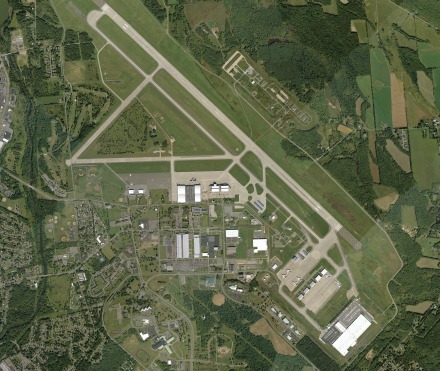
NEW YORK (May 18, 2021) – The U.S. Environmental Protection Agency (EPA) recently announced the Former Griffiss Air Force Base in New York as one of the winners of the 2021 National Federal Facility Excellence in Site Reuse Awards. These awards highlight the significant accomplishments of federal agencies, states, tribes, local partners, and developers in restoring and reusing contaminated land at federal facilities.

"Our award winners are to be commended for the creative thinking, hard work, and cooperation that went into the impressive redevelopment projects we are recognizing today." said Barry N. Breen, Acting Assistant Administrator for EPA's Office of Land and Emergency Management. "Their work clearly shows that addressing contaminated properties in a way that aligns with the needs of the surrounding community leads to win-win solutions for both the environment and the economy."

The former Air Force Base closed in 1995 due to the Base Realignment and Closure (BRAC) act of 1990. It has now evolved into an economic hub for central New York State known as the Griffiss Business and Technology Park. Today the 3,600-acre park includes Griffiss International Airport, numerous businesses, the New York Air National Guard Base, and the Air Force Research Laboratory. It is home to more than 72 tenants that employ nearly 6,000 people.


https://us.vocuspr.com/Publish/518041/vcsPRAsset_518041_119340_74a3548c-90e3-4959-b937-f9c953771e8e_0.jpg

Background

EPA has ongoing cleanup and property transfer responsibilities at 175 federal facility NPL sites, which are some of the largest and most complex sites within the national Superfund program. The Agency also promotes innovative, cost-effective cleanups at other federal facilities by working with federal agencies, tribes, state and local governments, and community representatives to ensure that facilities meet environmental standards and undergo redevelopment for both public and private-sector reuse. To recognize outstanding collaborative outcomes at federal facility sites, EPA created the National Federal Facility Excellence in Site Reuse award.

This award can be given to project teams including federal agency project managers; developers; reuse authorities; or state, tribal and local partners who have demonstrated excellence in working cooperatively with EPA to ensure the reuse of a Federal Facility site complements the type of cleanup actions taken. Award winners have demonstrated excellence in: 

  1. Working cooperatively and forming partnerships
  2. Complementing redevelopment design with the selected remedy
  3. Innovating beneficial use outcomes
  4. Considering the impacts on and inputs from the local community
  5. Creating jobs, fostering economic development or recreational opportunities, or supporting mission support

For more information about the 2021 awards, please visit www.epa.gov/fedfac/2021-national-federal-facility-excellence-site-reuse-awards

For more information about cleanups at federal facilities, please visit www.epa.gov/fedfac

Follow EPA Region 2 on Twitter at http://twitter.com/eparegion2 and visit our Facebook page, http://facebook.com/eparegion2


21-035            


EPA  @epa

Image


If you would rather not receive future communications from Environmental Protection Agency, let us know by clicking here.
Environmental Protection Agency, 290 Broadway, New York,, NY 10007-1866 United States

EPA Uses Emergency Powers to Protect St. Croix Communities and Orders Limetree Bay Refinery to Pause


Image


CONTACT: press@epa.gov
 

EPA Uses Emergency Powers to Protect St. Croix Communities and Orders Limetree Bay Refinery to Pause Operations


New York (May 14, 2021) — The U.S. Environmental Protection Agency (EPA) today ordered Limetree Bay Terminals, LLC and Limetree Bay Refining, LLC (Limetree Bay) to pause all operations at its St. Croix, U.S. Virgin Islands refinery due to multiple improperly conducted operations that present an imminent risk to public health. Under its legal authorities in Clean Air Act Section 303, EPA may take this urgent measure when an entity's actions are substantially endangering public health, welfare, or the environment. Limetree Bay is located in a community that is disproportionately affected by environmental burdens and its repeated incidents raise significant environmental justice concerns, which are a priority for EPA.

"These repeated incidents at the refinery have been and remain totally unacceptable. Today, I have ordered the refinery to immediately pause all operations until we can be assured that this facility can operate in accordance with laws that protect public health," said EPA Administrator Michael S. Regan. "This already overburdened community has suffered through at least four recent incidents that have occurred at the facility, and each had an immediate and significant health impact on people and their property. EPA will not hesitate to use its authority to enforce the law and protect people from dangerous pollution where they work, live, and play."

Since February of this year, the refinery has experienced multiple major mishaps resulting in significant air pollutant and oil releases. EPA is working to lend relief and assistance to the surrounding St. Croix community, many of whose members have been sickened by some of the releases. Working with the USVI government, EPA is committed to ensuring that the facility operates in compliance with the law without jeopardizing people's health and the environment.

On May 12, Limetree temporarily suspended operations following a serious incident that led to exceedance of the emission limit for sulfur dioxide (SO2), a potent toxic gas, endangering the health of nearby communities. Under this order, Limetree is required to pause all refining operations at the facility, arrange for an independent audit of the facility operations, and submit a plan for EPA's review and approval that addresses the auditors' recommendations for corrective measures at the refinery.

Pursuant to the Clean Air Act, the order will remain in effect for 60 days, unless extended through the United States' filing of a civil action in court. The refinery operations must remain paused until the order terminates, unless EPA makes a determination that operations can safely resume before then. Once refinery operations resume, Limetree must operate the refinery in a manner that does not present an imminent and substantial endangerment to the public and protects the health and welfare of residents living near the facility.

Background:

Amid concerns raised by and appeals filed by non-governmental organizations, members of the community and the company itself, on March 25, 2021 Administrator Regan withdrew a Clean Air Act Plantwide Applicability Limit (PAL) permit that had been previously issued on December 2, 2020.

On April 8, 2021, the U.S. Department of Justice, on behalf of EPA, filed a Motion to Enter the First and Second Modifications to a 2011 Consent Decree (CD). The 2011 CD resolved Clean Air Act violations of the prior owner, HOVENSA. The First Modification to the CD substitutes the facility's new owner, Limetree Bay, for HOVENSA, and adds an environmental response trust, established during bankruptcy, as a party to the CD.

On April 1 and April 30, 2021, EPA issued letters under Section 114 of the CAA requesting information regarding the startup of certain process units, the Feb. 4, 2021 flaring event, Title V reporting, other accidental air releases, ambient SO2 monitoring, and maintenance of certain boilers and process heaters. EPA, in conjunction with U.S. Virgin Islands Department of Planning and Natural Resources and U.S. Virgin Islands Department of Health, has been determining the level of the exceedances, the composition of the releases, the duration and cause of the incidents, the corrective actions taken or to be taken, the potential public health impacts, and how to best prevent future incidents.

On April 30, EPA issued a notice of violation to Limetree Bay Terminals, LLC for alleged violations of the Clean Air Act for failing to operate five sulfur dioxide (SO2) monitors in the surrounding communities of Christiansted on St. Croix, U.S. Virgin Islands, and the associated weather tower on the facility grounds.

EPA will be monitoring the air near the Limetree Bay refinery. EPA experts will be monitoring for sulfur dioxide (SO2) and hydrogen sulfide (H2S) at strategically located fixed sampling stations. EPA will work to ensure that monitoring data is provided to the appropriate health experts for interpretation of any potential health impacts and distribution of that information to the public. These data and other information that EPA is gathering will help inform the Agency's work as it assesses the situation at this facility and determines any additional steps needed to protect public health and the environment. Additionally, EPA has set in motion several additional sets of inspections at the facility over the course of the coming months to focus on compliance with multiple environmental statutes.

To read the EPA order, visit: https://www.epa.gov/vi/limetree-bay-terminals-and-limetree-bay-refining-llc

Follow EPA Region 2 on Twitter at http://twitter.com/eparegion2 and visit our Facebook page, http://facebook.com/eparegion2

21-033.


EPA  @epa

Image


If you would rather not receive future communications from Environmental Protection Agency, let us know by clicking here.
Environmental Protection Agency, 290 Broadway, New York,, NY 10007-1866 United States

EPA Requests Public Comments on Deletion of the Reich Farms Superfund Site


Image

  EPA Requests Public Comments on Deletion of the Reich Farms Superfund Site EPA Requests

CONTACT: press@epa.gov

New York (May 14, 2021) — After cleanup work was completed and after review of years of groundwater monitoring data, the U.S. Environmental Protection Agency (EPA) has announced its intention to delete the Reich Farms Superfund Site from the National Priorities List and requests public comments on this proposed action. The National Priorities List is the EPA's list of sites that are priorities for long-term evaluation and response under Superfund. Previous activities at the site, located in Toms River, New Jersey, included the improper disposal and storage of hazardous waste that contaminated soil and groundwater with toxic chemicals such as volatile organic compounds.

"All cleanup work at Reich Farms has been successfully completed and years of monitoring data show that it can be safely removed from the EPA's Superfund list," said EPA Acting Regional Administrator Walter Mugdan. "Over many decades, EPA has overseen cleanup work at this site and has kept the community informed as well as engaged in our cleanup activities, monitoring and scientific studies. Deletion of this site is the next logical step."

The three-acre Reich Farms property, which comprises part of the overall site, is located on Lakewood Road in the Pleasant Plains section of Toms River. The property is surrounded by commercial and residential areas. Deletion of a site from the National Priorities List occurs when site cleanups are successfully completed, and no further cleanup is required to protect human health or the environment, as is the case for this site.

In the early 1970s, drums containing wastes from Union Carbide Corporation's (UCC) Bound Brook chemical manufacturing facility were disposed of on the property. UCC, the potentially responsible party, removed the drums and some contaminated soil in 1971. Residual wastes leaked from the drums contaminating the soil and eventually the underlying groundwater with organic chemicals. In September 1983, EPA placed the site on its National Priorities List of Superfund sites.

EPA's cleanup plan in the form of a 1988 Record of Decision called for, among other things, excavation and treatment of contaminated soil and extraction and treatment of contaminated groundwater at the site. EPA modified the selected cleanup on three occasions after it was issued, most recently in 2015.  After treating over 15,000 cubic yards of contaminated soil, UCC completed the soil clean-up and eliminated contaminated soil as a source of groundwater contamination. In June 1997, four activated carbon units were added to the existing groundwater treatment system to remove a group of previously unidentified compounds (known as "SAN Trimer"), which were coming from the site.

In 2000, the National Toxicology Program began a study on a styrene-acrylonitrile trimer (SAN Trimer), which was discovered at the site to determine if the compound was a carcinogen. A peer review of the study was completed in January 2011 and a final report was released in 2012. Based largely on those results, EPA developed site-specific soil and groundwater cleanup goals for the SAN Trimer. Soil and groundwater at the Reich Farms Site have met those goals.

The site cleanup is complete. Site contaminants in soil and groundwater are below levels that would pose an unacceptable risk to human health or the environment. Post remediation sampling of the groundwater will continue for several more years. The New Jersey Department of Environmental Projection was consulted and supports the deletion of this site from the NPL.

The public is invited to comment on the proposed decision to delete this site from the NPL.  Public comments on the proposed deletion will be accepted for thirty (30) days until June 14, 2021, and should be addressed to Jon Gorin, U.S. Environmental Protection Agency, 290 Broadway, 19th Floor, New York, NY 10007-1866

Written comments can also be emailed to Mr. Gorin at gorin.jonathan@epa.gov

For more information about the Reich Farms Superfund Site, visit: https://www.epa.gov/superfund/reich-farm

Follow EPA Region 2 on Twitter at http://twitter.com/eparegion2 and visit our Facebook page, http://facebook.com/eparegion2

21.034

EPA  @epa

Image


If you would rather not receive future communications from Environmental Protection Agency, let us know by clicking here.
Environmental Protection Agency, 290 Broadway, New York,, NY 10007-1866 United States

EPA Announces Public Listening Sessions and Trainings on Upcoming Oil and Natural Gas Methane Rule


U.S. EPA Office of Public Engagement

EPA Announces Public Listening Sessions and Trainings on Upcoming Oil and Natural Gas Methane Rule

WASHINGTON (May 14, 2021) — Today, the U.S. Environmental Protection Agency (EPA) is taking the first step to develop a proposed rule to reduce methane and other harmful pollutants from new and existing sources in the oil and natural gas industry, beginning with a broad public outreach effort to gather community and stakeholder input. These activities include holding training sessions on the rulemaking process and how to participate in it, convening listening sessions for stakeholders, and opening a public docket for pre-proposal comments.  

The oil and natural gas industry is the largest industrial source of U.S. emissions of methane, a potent greenhouse gas, and its facilities and operations also emit smog-forming volatile organic compounds and toxic air pollutants such as benzene. Today's actions are in response to President Biden's Executive Order 13990, and are key steps toward EPA's commitment to deliver public health protections from methane pollution for communities across America.

"As we move forward to reduce pollution from oil and gas operations, it is vitally important to hear from all stakeholders, including those from impacted communities and industry," said EPA Administrator Michael S. Regan. "This process enables EPA to engage with communities that have historically borne a disproportionate burden from pollution so that we can ensure those voices are reflected in our policymaking."

President Biden's Executive Order "Protecting Public Health and the Environment and Restoring Science to Tackle the Climate Crisis" called on EPA to consider issuing a proposed rule by September 2021 to strengthen standards for methane emissions from new, reconstructed, and modified oil and natural gas sources and to address methane emissions from existing sources.
 
How to share input: 

  • Training webinars: On May 25, 26, and 27, 2021, EPA will hold training webinars for communities, Tribes and small businesses to provide an overview of the oil and natural gas industry and share information to help members of those groups effectively engage in the regulatory process. Each training will be held at 2 p.m. eastern time. 
     
  • Public Listening Sessions: EPA will hold virtual public listening sessions from noon to 9 p.m. eastern time June 15, 16, and 17, 2021. During the listening sessions, registered members of the public will have the chance to provide their views on the oil and natural gas industry as it relates to climate change, health and EPA's upcoming proposed rule. The agency also has opened a non-rulemaking docket for people who wish to provide their input and perspectives in writing. 
     
  • Docket for public input: Beginning today, members of the public may submit their perspectives and input to the docket in advance of the September proposed rulemaking. Instructions for submitting input are available on EPA's website, listed below.

For information on submitting input to the docket, or to register to attend a training or listening session, visit https://www.epa.gov/controlling-air-pollution-oil-and-natural-gas-industry/epa-announces-public-listening-sessions. EPA will post additional outreach opportunities to this website as they are scheduled. 


EPA  @epa

Image


If you would rather not receive future communications from US EPA, Office of Public Engagement, let us know by clicking here.
US EPA, Office of Public Engagement, 1200 Pennsylvania Avenue NW, Washington, DC 20460 United States

EPA Rescinds Unnecessary Benefit-Cost Rule


U.S. EPA Office of Public Engagement

EPA Rescinds Unnecessary Benefit-Cost Rule

WASHINGTON (May 13, 2021) — Today, the U.S. Environmental Protection Agency (EPA) issued an interim final rule to rescind the previous administration's rule entitled "Increasing Consistency and Transparency in Considering Benefits and Costs in the Clean Air Act Rulemaking Process," also known as the Benefit-Cost Rule. In response to President Biden's Executive Order 13990, "Protecting Public Health and the Environment and Restoring Science To Tackle the Climate Crisis," EPA reviewed the Benefit-Cost Rule and found that it imposed procedural restrictions and requirements that would have limited EPA's ability to use the best available science in developing Clean Air Act regulations, and would be inconsistent with economic best practices.

"EPA has critical authority under the Clean Air Act to protect the public from harmful air pollution, among other threats to our health. Revoking this unnecessary and misguided rule is proof positive of this Administration's commitment to science," said EPA Administrator Michael S. Regan. "We will continue to fix the wrongs of the past and move forward aggressively to deliver on President Biden's clear commitment to protecting public health and the environment."

On January 20, 2021, President Biden signed Executive Order 13990 which directed the EPA to review all regulations and policies undertaken by the previous administration, and rescind or revise any that do not protect public health and the environment. Accordingly, the EPA conducted a comprehensive review of the Benefit-Cost Rule and concluded that the rule should be rescinded in its entirety for several reasons:

  • The Benefit-Cost Rule imposed broad restrictions and requirements on when and how the Agency must conduct benefit-cost analyses (BCA) for Clean Air Act rulemakings without explaining why those requirements were needed.
  • The Benefit-Cost Rule was not necessary to carry out the Clean Air Act because the EPA already prepares a BCA for Clean Air Act rules that warrant such analysis.
  • The codification of specific practices in the Benefit-Cost Rule limited the EPA's ability to rely on the best available science.
  • The Benefit-Cost Rule's presentational requirements invited net benefit calculations in regulatory preambles that are misleading and inconsistent with economic best practices.
  • The Benefit-Cost Rule did not reconcile its provision that the Agency consider the required BCAs with the substantive mandates of the Clean Air Act.
  • The pre-existing and ongoing administrative process provides for ample consistency and transparency. EPA will continue to conduct rigorous, state-of-the-art benefit-cost analyses in accordance with the applicable Executive Orders and Office of Management and Budget directives.

This interim final rule will become effective 30 days after publication in the Federal Register. EPA invites and will consider public comment on this rule, and intends to follow it with a final rule that responds to comments received during the public comment period, if any, and reflects any accompanying changes to the Agency's approach.  

For more on the rescission of the Benefit-Cost Rule, and how to comment, visit https://www.epa.gov/air-and-radiation/rescission-2020-benefit-cost-rule


EPA  @epa

Image


If you would rather not receive future communications from US EPA, Office of Public Engagement, let us know by clicking here.
US EPA, Office of Public Engagement, 1200 Pennsylvania Avenue NW, Washington, DC 20460 United States

EPA Announces Selection of Four Communities in Va. to Receive $1.5 Million in Brownfields Funding


Image

FOR IMMEDIATE RELEASE

Contact: R3press@epa.gov

EPA Announces the Selection of Four Communities in Virginia to Receive $1.5 Million in Brownfields Assessment and Cleanup Funding

Will help underserved communities Build Back Better and address Environmental Justice concerns

PHILDELPHIA (May 12, 2021) – The U.S. Environmental Protection Agency (EPA) is announcing the selection of 151 communities to receive 154 grant awards totaling $66.5 million in Brownfields funding through its Multipurpose, Assessment, and Cleanup (MAC) Grants. This includes $1.5 million for communities in Virginia.

This funding will support underserved and economically disadvantaged communities across the country in assessing and cleaning up contaminated and abandoned industrial and commercial properties. Approximately 50 percent of selected recipients will be receiving EPA Brownfields Grant funding for the first time and more than 85 percent are in small communities.

"Through our Brownfields Program, EPA is delivering on the Biden Administration's commitment to lifting up and protecting overburdened communities across America, especially communities that have experienced long periods of disinvestment and decay," said EPA Administrator Michael S. Regan. "These assessment and cleanup grants will not only support economic growth and job creation, but they will also empower communities to address the environmental, public health, and social issues associated with contaminated land."

These MAC grants include:

  • $42.2 million for 107 Assessment Grants, which will provide funding for brownfield inventories, planning, environmental assessments, and community outreach.
  • $15.5 million for 36 Cleanup Grants, which will provide funding to carry out cleanup activities at brownfield sites owned by the recipient.

The MAC grant recipients in Virginia are:                                                                          

Northampton County, Exmore, Virginia - Assessment Grant $300,000

EPA has selected Northampton County for a Brownfields Assessment Grant. Community-wide grant funds will be used to develop 10 Phase I and five Phase II environmental site assessments. Grant funds also will be used to develop cleanup and reuse plans, and conduct community outreach activities. Priority sites include a former railroad depot, a former Benjamin's Department Store, and a former Coca-Cola bottling plant, all in the target area of the Town of Exmore.

Pittsylvania County, Virginia - Assessment Grant $600,000

EPA has selected Pittsylvania County for a Brownfields Assessment Coalition Grant. Community-wide grant funds will be used to develop 18 Phase I and six Phase II environmental site assessments. Grant funds also will be used to prepare five site-specific redevelopment plans for priority sites and three area-wide revitalization plans. Assessment activities will focus on five priority sites: the Staunton Plaza Shopping Center and the 600-acre Burlington Industries property in Hurt; the 100 Block of South Main Street in Gretna, which contains the Gretna Commercial Historic District; Pat's Place, which is a former diner in Chatham; and the Blairs Southside Manufacturing former mill site. Coalition partners are the Towns of Chatham, Gretna, and Hurt.

Staunton, Virginia - Assessment Grant $300,000

EPA has selected the City of Staunton for a Brownfields Assessment Grant. Community-wide grant funds will be used to develop 10 Phase I and three Phase II environmental site assessments. Grant funds also will be used to support community engagement activities, including hosting four community meetings. Assessment activities will focus on the West End of Staunton. Priority sites include the former Unifi Manufacturing site, the vacant Chestnut Hills Shopping center, the National Biscuit Company (Nabisco) Warehouse, and the Rose Time Scrap and Metal Recycling facility.

EPA has selected the Virginia Department of Environmental Quality for a Brownfields Assessment Grant. Community-wide grant funds will be used to develop 10 Phase I and five Phase II environmental site assessments, and develop cleanup and reuse plans. Grant funds also will be used to host 12 meetings with community groups, site owners, and developers, and conduct other community engagement activities. The target area for this grant is Virginia's Southside Planning District Commission Region, which is comprised of Brunswick, Halifax, and Mecklenburg Counties. Priority sites include the JP Stevens Plant, the Burlington Clarksville Plant, and the Brunswick Correctional Facility.

The list of all the fiscal year 2021 applicants selected for funding is available here: https://www.epa.gov/brownfields/applicants-selected-fy-2021-brownfields-multipurpose-assessment-and-cleanup-grants.

EPA anticipates that it will award the grants once all legal and administrative requirements are satisfied by the selected recipients.

Since its inception in 1995, EPA's Brownfields Program has provided nearly $1.76 billion in grants to assess and clean up contaminated properties and return them to productive reuse. This has led to significant benefits for communities across the country. For example,

  • To date, communities participating in the Brownfields Program have been able to attract more than $34.4 billion in cleanup and redevelopment funding after receiving Brownfields funds. This has led to over 175,500 jobs in cleanup, construction, and redevelopment.
  • Based on grant recipient reporting, recipients leveraged on average $20.13 for each EPA Brownfields dollar and 10.3 jobs per $100,000 of EPA Brownfield Grant funds expended on assessment, cleanup, and revolving loan fund cooperative agreements.
  • In addition, an academic peer-reviewed study has found that residential properties near brownfield sites increased in value by 5% to 15.2% because of cleanup activities.
  • Finally, analyzing data near 48 brownfields, EPA found an estimated $29 million to $97 million in additional tax revenue for local governments in a single year after cleanup—2 to 7 times more than the $12.4 million EPA contributed to the cleanup of those brownfield sites.

For more on the Brownfields Grants: https://www.epa.gov/brownfields/types-brownfields-grant-funding

For more on EPA's Brownfields Program: https://www.epa.gov/brownfields


EPA  @epa

Image


If you would rather not receive future communications from Environmental Protection Agency, let us know by clicking here.
Environmental Protection Agency, 1650 Arch Street, Philadelphia, PA 19103-2029 United States

EPA Selects Five Projects in New York to Receive $2.8 Million for Brownfields Cleanup and Assessment


Image


Contact: John Senn, (212) 637-3662, senn.john@epa.gov
 

EPA Announces the Selection of Five Projects in New York's Mohawk Valley, Capital District and on Long Island to Receive $2.8 Million for Brownfields Cleanup and Assessment 
The grant awards help underserved communities Build Back Better and address Environmental Justice concerns 


NEW YORK (May 12, 2021) — Today, the U.S. Environmental Protection Agency (EPA) is announcing that five entities in New York's Mohawk Valley, Capital District and on Long Island have been selected to receive a total of $2.8 million to assess and clean up contaminated properties under the agency's Brownfields Program. Nationwide, 151 communities will receive 154 grant awards totaling $66.5 million in EPA Brownfields funding through its Multipurpose, Assessment, and Cleanup (MAC) Grants.

This funding will support underserved and economically disadvantaged communities across the country in assessing and cleaning up contaminated and abandoned industrial and commercial properties. Approximately 50 percent of selected recipients will be receiving EPA Brownfields Grant funding for the first time and more than 85 percent are located in or serving small communities.

"Cleaning up brownfields helps protect the environment and serves as a catalyst to jumpstart much needed economic growth in New York communities, often in historically underserved areas," said EPA acting Regional Administrator Walter Mugdan. "These grants address decades-old sources of pollution and bring together a broad spectrum of stakeholders who work in concert to make their communities better and more sustainable places to live, work and play."


The five selectees and projects are:

  • Fulton County Center for Regional Growth, Inc. ($300,000 assessment grant): Community-wide grant funds will be used to inventory sites and conduct eight environmental site assessments. Grant funds also will be used to develop four reuse plans and support community outreach activities. Priority sites in Fulton County include a former municipal landfill, a vacant former chemical supply company, an active dry-cleaning facility, and an abandoned leather tannery located in a residential neighborhood.
     
  • Greater Mohawk Valley Land Bank ($800,000 multipurpose grant): Grant funds will be used to update a brownfields site inventory, select sites for investigation, and conduct 15 environmental site assessments. Grant funds also will be used to clean up five properties, develop six reuse plans, and support community outreach activities. The target area for this grant is a 20-mile stretch of land along the Erie Canal Corridor that includes the Villages of Canajoharie and Fort Plain and the City of Little Falls. Priority sites include a vacant mixed-use apartment building in Little Falls, an abandoned high school and large vacant properties in Fort Plain, and a former general store and filling station in Canajoharie.
     
  • Mohawk Valley Economic Development Growth Enterprises Corporation ($300,000 assessment grant): Community-wide grant funds will be used to develop a brownfields site inventory, conduct 14 environmental site assessments, and prepare three reuse plans. Grant funds also will be used to support community outreach activities. The target areas for this grant are the cities of Rome, Utica, and Sherrill. Priority sites include an abandoned three-story housing unit in Utica, downtown Rome's East Rome and Little Italy neighborhoods along the Erie Canal Corridor, and a former gas station in Sherrill.
     
  • Town of North Hempstead ($800,000 multipurpose grant): Grant funds will be used to conduct 10 environmental site assessments, and clean up as many as six priority sites, including 740 and 746 Prospect Avenue, which comprises undeveloped land and a vacant mixed-use building that is contaminated with heavy metals and petroleum. Grant funds also will be used to conduct community outreach activities. The target area is the low-income, predominantly minority New Cassel hamlet area.
     
  • City of Troy ($600,000 assessment grant): Community-wide grant funds will be used to prepare a brownfields site inventory, select sites for assessment, and conduct 32 environmental site assessments. Grant funds also will be used to produce 12 reuse plans and conduct community outreach activities. Assessment activities will focus on the South Troy Working Waterfront area. Priority sites include a former industrial and commercial property and the Clemente Latham Concrete site on First Street, and the 13-acre Troy Slag Assembly property formerly used for coal storage. Coalition partners are the Troy Land Development Corporation and Troy Industrial Development Authority.


Ron Peters, President & CEO of the Fulton County Center for Regional Growth said: "I would like to thank the Environmental Protection Agency for awarding CRG a Brownfield Assessment Grant. This grant will give us the ability to assess our brownfield sites, bring them to the next level and return them to productive economic development opportunities."

Greater Mohawk Valley Land Bank Project Director John Mazzarella said: "The Greater Mohawk Valley Land Bank is thrilled by the award decision, and the EPA Brownfield Grant will have a lasting impact on our projects and the health of the residents in the communities we serve."

"The Town was one of only ten in the country to receive this extremely competitive grant," said North Hempstead Town Supervisor Judi Bosworth. "We are grateful to the EPA for awarding us the Brownfields Multi-Purpose grant. The funding will go a long way in helping us continue community outreach and conduct further in-depth environmental studies and assessments that fit the community's vision for New Cassel. This is an extraordinarily unique opportunity for the people of New Cassel to participate in something special – the continued reimagination of their neighborhood. This grant will greatly assist us in facilitating a community-wide conversation about how best to revitalize New Cassel."

"This brownfields assessment grant will empower us to revitalize communities all across Oneida County," said Oneida County Executive Anthony J. Picente Jr. "Mohawk Valley EDGE has worked long and hard to assist our municipalities in redeveloping long-blighted properties, and this funding from the USEPA will provide the spark they so desperately need to ignite the process. We are grateful for the opportunity they have provided to further secure the county's future."


Troy Mayor Patrick Madden said: "The cleanup and reutilization of brownfield sites along South Troy's waterfront will support the city's continued growth, expand the tax base and create opportunities for public access to the Hudson River. With support of the Environmental Protection Agency's Brownfield Assessment Program, we can identify contaminants and plan the remediation necessary to redevelop over 200 acres of vacant riverfront property and extend the city's Riverwalk south. We applaud the EPA for their work to support future cleanup efforts that will allow our community to return brownfield sites to productive use."

"This vital funding has the double benefit of eliminating pollution and putting land back into use for economic development in communities across New York," said U.S. Senate Majority Leader Charles E. Schumer. "I am proud to support this funding from EPA to address brownfields in the Mohawk Valley, Capital District and on Long Island, and I will continue to fight for communities adversely affected by pollution and to preserve New York's natural resources."

"For years, the EPA's Brownfields Program has helped breathe new life into communities across our nation, bolstering local economies, creating new jobs, supporting environmental justice communities and protecting human health," Congressman Paul Tonko said. "Now more than ever, it is critical that we deliver the resources needed to help Americans build back better. I thank the EPA for their sound investment revitalizing brownfield sites in our Capital Region. I remain committed to ensuring that our communities receive robust federal support to drive new opportunities for economic development while protecting the health of our environment."

"EPA's Brownfields investment in the Mohawk Valley, including the Villages of Canajoharie and Fort Plain, will help clean up contamination, create jobs, and help underserved communities," said Congressman Antonio Delgado. "As we recover from COVID-19 and begin to rebuild, I will keep working to deliver meaningful federal support to our local economies. From our Main Streets to our precious waterways, we must invest in upstate to build back our communities stronger, safer, and healthier."

"Contaminated land from abandoned industries has historically been a costly public health issue on Long Island," said Representative Kathleen Rice. "I am pleased the federal government is stepping in to clean up areas in Westbury and New Cassel so we can jump start our local economy and prevent further contamination of our drinking water. I will continue fighting in Congress for additional funding to keep our Long Island communities clean and healthy."

Today's grant announcement includes:

  • $8.8 million for 11 Multipurpose Grants, which will provide funding to conduct a range of eligible assessment and cleanup activities at one or more brownfield sites in a target area. 
  • $42.2 million for 107 Assessment Grants, which will provide funding for brownfield inventories, planning, environmental assessments, and community outreach.
  • $15.5 million for 36 Cleanup Grants, which will provide funding to carry out cleanup activities at brownfield sites owned by the recipient.

The list of the fiscal year 2021 applicants selected for funding is available here:  https://www.epa.gov/brownfields/applicants-selected-fy-2021-brownfields-multipurpose-assessment-and-cleanup-grants

EPA anticipates that it will award the grants once all legal and administrative requirements are satisfied by the selected recipients.

Since its inception in 1995, EPA's Brownfields Program has provided nearly $1.76 billion in grants to assess and clean up contaminated properties and return them to productive reuse. This has led to significant benefits for communities across the country. For example,

  • To date, communities participating in the Brownfields Program have been able to attract more than $34.4 billion in cleanup and redevelopment funding after receiving Brownfields funds. This has led to over 175,500 jobs in cleanup, construction, and redevelopment.
  • Based on grant recipient reporting, recipients leveraged on average $20.13 for each EPA Brownfields dollar and 10.3 jobs per $100,000 of EPA Brownfield Grant funds expended on assessment, cleanup, and revolving loan fund cooperative agreements.
  • In addition, an academic peer-reviewed study has found that residential properties near brownfield sites increased in value by 5% to 15.2% as a result of cleanup activities.
  • Finally, analyzing data near 48 brownfields, EPA found an estimated $29 million to $97 million in additional tax revenue for local governments in a single year after cleanup—2 to 7 times more than the $12.4 million EPA contributed to the cleanup of those brownfield sites.

For more on the Brownfields Grants: https://www.epa.gov/brownfields/types-epa-brownfield-grant-funding

For more on EPA's Brownfields Program: https://www.epa.gov/brownfields
 

20-032                                                                          ###


EPA  @epa

Image


If you would rather not receive future communications from Environmental Protection Agency, let us know by clicking here.
Environmental Protection Agency, 290 Broadway, New York,, NY 10007-1866 United States

EPA Selects Three Projects in Western New York to Receive $1.4 Million in Brownfields Funding


Image


CONTACTJohn Senn, (212) 637-3662, senn.john@epa.gov
 

EPA Announces the Selection of Three Projects in Western New York to Receive $1.4 Million for Brownfields Cleanup and Assessment

The grant awards help underserved communities Build Back Better and address Environmental Justice concerns


NEW YORK (May 12, 2021) — Today, the U.S. Environmental Protection Agency (EPA) is announcing that three Western New York communities have been selected to receive a total of $1.4 million to assess and clean up contaminated properties under the agency's Brownfields Program. Nationwide, 151 communities will receive 154 grant awards totaling $66.5 million in EPA Brownfields funding through its Multipurpose, Assessment, and Cleanup (MAC) Grants.

This funding will support underserved and economically disadvantaged communities across the country in assessing and cleaning up contaminated and abandoned industrial and commercial properties. Approximately 50 percent of selected recipients will be receiving EPA Brownfields Grant funding for the first time and more than 85 percent are located in or serving small communities.

"Cleaning up brownfields helps protect the environment and serves as a catalyst to jumpstart much needed economic growth in Western New York communities, often in historically underserved areas," said EPA acting Regional Administrator Walter Mugdan. "These grants address decades-old sources of pollution and bring together a broad spectrum of stakeholders who work in concert to make their communities better and more sustainable places to live, work and play."


The selectees and projects in Western New York are:

  • City of Lackawanna ($300,000 assessment grant): Community-wide grant funds will be used to conduct up to 25 environmental site assessments. Grant funds also will be used to support reuse planning and community outreach activities. The target area for this grant is the city's first ward. Priority sites include several vacant lots and industrial facilities along the Hamburg Turnpike, Ridge Road, and Smokes Creek Corridors, several of which are remnants of the city's steel industry.
     
  • Niagara County ($300,000 assessment grant): Community-wide grant funds will be used to conduct 21 environmental site assessments. Grant funds also will be used to develop three cleanup plans and support community engagement activities. The target areas for this grant are the cities of Lockport, Niagara Falls, and North Tonawanda. Priority sites include a former hydropower generating facility in Lockport and a heavy equipment storage yard in North Tonawanda.
     
  • City of Rochester ($800,000 multipurpose grant): Grant funds will be used to conduct an environmental site assessment at the Bull's Head Plaza on West Main Street and an environmental site assessment and cleanup at the 42 York Street property. The mostly vacant Bull's Head plaza was constructed as an auto-oriented commercial and retail shopping center in the 1950s and is contaminated with chlorinated volatile organic compounds, heavy metals, and semi-volatile organic compounds (SVOCs). The 42 York Street property was previously developed with residential properties and parking areas; fill material historically deposited on the property is contaminated with heavy metals and SVOCs. The target area is the 185-acre area Bull's Head neighborhood, a key historic gateway to Rochester that has been a focus of the city's revitalization efforts with over a decade of community-based revitalization planning. Grant funds also will be used to conduct community outreach activities.

"The City of Lackawanna is grateful to be among the recipients of a 2021 US EPA Brownfield Assessment Grant, continuing our longstanding working partnership with the EPA," said Lackawanna Mayor Annette Iafallo. "This valuable funding resource will allow Lackawanna to continue moving forward with redeveloping and reconnecting brownfield land with a legacy of world class multi-modal transportation infrastructure from the city's storied industrial past, which is essential to our strategic plan for attracting new development investments and jobs to Lackawanna."

Niagara County Legislature Chairwoman Rebecca Wydysh stated: "For over 20 years Niagara County has been a leader in brownfield efforts and the grant award from the federal government will further build upon our progress of assessing brownfield sites throughout the County. By determining the level of contamination, properties can be remediated and returned to productive use creating jobs and new tax revenue."

Rochester Mayor Lovely A. Warren said: "As we work together to restore the vitality and prominence of Bull's Head, I am extremely grateful for the Environmental Protection Agency's continued commitment to rebuild and restore this important part of Rochester's west side. The EPA's award of $800,000 through their Brownfield Grant Program is a critical investment towards our transformative redevelopment at Bull's Head. Together with local resources and the EPA's previous award of $408,000 last year, this historic part of our City is poised for remarkable positive change."

"This federal funding will help our Western New York communities address a legacy of pollution and is great news to New Yorkers living in The City of Rochester, Niagara County, and The City of Lackawanna. This vital funding has the double benefit of eliminating pollution and putting the land back into use for economic development," said U.S. Senate Majority Leader Charles E. Schumer. "I am proud to announce this funding from EPA to address brownfields in Western New York, and I will continue to fight for communities adversely affected by pollution and to preserve Upstate New York's natural resources."

"Western New York is still dealing with the remnants of an industrial past that failed to protect the ground, water and air," said Congressman Brian Higgins. "These EPA investments advance initiatives that continue efforts to ensure neighborhoods are safe, clean and healthy for all residents."


Congressman Joseph Morelle said: "The Bull's Head area was once a lively and vibrant part of our community, and this investment is an important step toward restoring this neighborhood as a prominent part of Rochester. I am grateful to the Environmental Protection Agency for their commitment to making critical investments that not only clean up underserved parts of our community, but that can transform Rochester for decades to come."

Congressman Chris Jacobs said: "I commend the EPA for prioritizing brownfield assessment and cleanup in Western New York. These funds will support the restoration and safe reuse of highly contaminated areas within our communities, bringing new life and prosperity into our region. This is another important step toward revitalizing and rebuilding Western New York." 

Today's grant announcement includes:

  • $8.8 million for 11 Multipurpose Grants, which will provide funding to conduct a range of eligible assessment and cleanup activities at one or more brownfield sites in a target area. 
     
  • $42.2 million for 107 Assessment Grants, which will provide funding for brownfield inventories, planning, environmental assessments, and community outreach.
     
  • $15.5 million for 36 Cleanup Grants, which will provide funding to carry out cleanup activities at brownfield sites owned by the recipient.

The list of the fiscal year 2021 applicants selected for funding is available here:  https://www.epa.gov/brownfields/applicants-selected-fy-2021-brownfields-multipurpose-assessment-and-cleanup-grants

EPA anticipates that it will award the grants once all legal and administrative requirements are satisfied by the selected recipients.

Since its inception in 1995, EPA's Brownfields Program has provided nearly $1.76 billion in grants to assess and clean up contaminated properties and return them to productive reuse. This has led to significant benefits for communities across the country. For example,

  • To date, communities participating in the Brownfields Program have been able to attract more than $34.4 billion in cleanup and redevelopment funding after receiving Brownfields funds. This has led to over 175,500 jobs in cleanup, construction, and redevelopment.
  • Based on grant recipient reporting, recipients leveraged on average $20.13 for each EPA Brownfields dollar and 10.3 jobs per $100,000 of EPA Brownfield Grant funds expended on assessment, cleanup, and revolving loan fund cooperative agreements.
  • In addition, an academic peer-reviewed study has found that residential properties near brownfield sites increased in value by 5% to 15.2% as a result of cleanup activities.
  • Finally, analyzing data near 48 brownfields, EPA found an estimated $29 million to $97 million in additional tax revenue for local governments in a single year after cleanup—2 to 7 times more than the $12.4 million EPA contributed to the cleanup of those brownfield sites.

For more on the Brownfields Grants: https://www.epa.gov/brownfields/types-epa-brownfield-grant-funding

For more on EPA's Brownfields Program: https://www.epa.gov/brownfields
 

21-031                                                                          ###


EPA  @epa

Image


If you would rather not receive future communications from Environmental Protection Agency, let us know by clicking here.
Environmental Protection Agency, 290 Broadway, New York,, NY 10007-1866 United States